
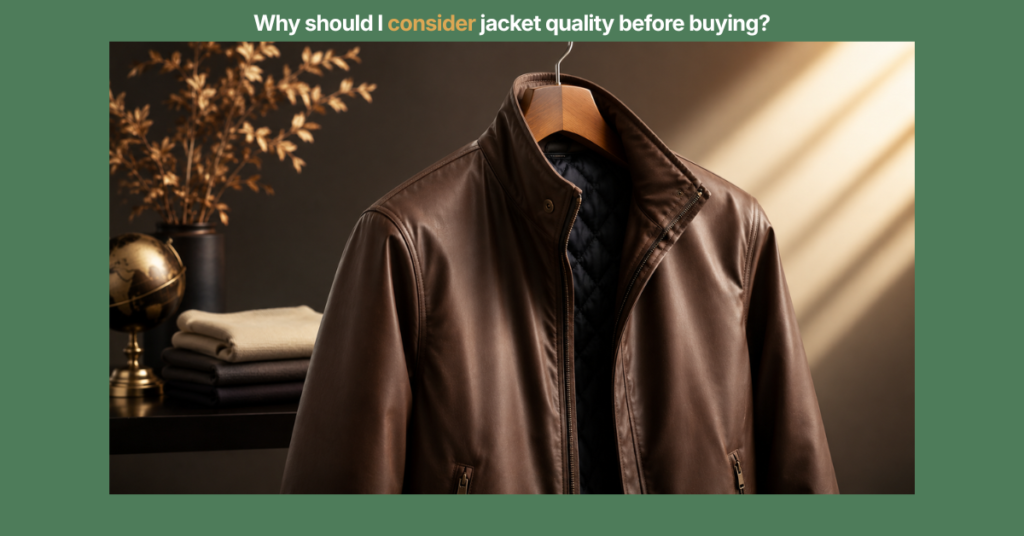
Why should I consider jacket quality before buying?
Considering jacket quality before buying dictates the garment’s long-term financial return on investment by prioritizing structural construction and durable materials over initial retail price. Purchasing outerwear based purely on aesthetics or initial price tag frequently results in catastrophic hardware failure and expensive, repeated replacement cycles. Consumers often ignore the mechanical demands placed on outdoor apparel, selecting garments engineered for showroom appeal rather than physical resilience. This oversight forces buyers into a continuous loop of replacing inadequate gear season after season. This guide provides a rigorous diagnostic framework for assessing outerwear craftsmanship, comparing premium construction against budget alternatives, and avoiding high-stakes durability mistakes.
By applying objective textile engineering principles to your purchasing process, you eliminate the guesswork from gear selection. Garment construction relies on quantifiable metrics—such as fiber density, stitching precision, and polymer integrity. Understanding these variables transforms a passive buyer into an informed evaluator. We will examine the specific components that dictate a jacket’s lifespan, establishing a reliable methodology to measure actual value against marketing claims.
Why evaluating jacket quality prevents expensive replacement cycles
Evaluating jacket quality prevents expensive replacement cycles by exposing cheap materials that degrade rapidly under elemental stress, forcing repeated seasonal purchases. When consumers default to the lowest available price, they inadvertently finance inferior manufacturing processes. Garments constructed with low-grade synthetic textiles and substandard polymer coatings cannot withstand the mechanical friction and environmental degradation inherent to outdoor use. Identifying these manufacturing shortcuts before purchase insulates the buyer from subsequent, inevitable gear failures.
Rule: Always prioritize the physical construction and material integrity of a garment over its initial retail price to maximize long-term utility.
Reason: Cheap materials degrade rapidly under elemental stress, such as ultraviolet light exposure, saline accumulation from sweat, and continuous abrasion. This rapid physical breakdown forces repeated purchases, drastically increasing the Cost-Per-Wear (CPW). The Cost-Per-Wear metric calculates the true financial impact of apparel by dividing the initial price by the number of viable uses. A budget jacket requiring replacement every winter yields a severely inflated CPW compared to a technically superior garment that endures for a decade.
Example: Consider a scenario where a budget zipper derails during a winter storm due to poor tooth molding and sub-standard metal alloys. This single point of failure renders the entire coat useless, instantly exposing the wearer to severe convective heat loss and wind chill. The immediate necessity to purchase an emergency replacement negates any initial savings realized at the checkout counter.
How to assess outerwear craftsmanship before looking at the price tag
Assessing outerwear craftsmanship requires a systematic physical inspection of hardware integrity, stitching density, and face fabric durability before evaluating the price tag. Visual aesthetics offer zero indication of how a garment will perform when subjected to kinetic movement and adverse weather. True evaluation demands tactile examination and an understanding of manufacturing standards. By isolating individual components and measuring them against established technical benchmarks, you can objectively determine if a jacket possesses the structural resilience required for sustained field use.
Hardware Integrity: Check for molded-tooth YKK VISLON zippers and metal-reinforced snap closures. Standard coil zippers frequently warp under tension and easily collect debris, leading to jamming. Conversely, YKK VISLON zippers utilize injected plastic elements molded directly onto the zipper tape, offering superior resistance to jamming and freezing in sub-zero temperatures. Inspect all anchoring points for metal hardware to ensure they distribute stress evenly across the textile.
Stitching Density: Look for high Stitches-Per-Inch (SPI) counts and fully taped seams. A low SPI indicates rushed manufacturing, leaving wide gaps that compromise structural integrity. A high SPI tightly binds panels, preventing water ingress and seam bursting under kinetic tension. Furthermore, verify that internal seams are sealed with high-quality polyurethane seam tape, applied evenly without bubbling or peeling.
Material Composition: Evaluate face fabric durability by checking the Denier (D) rating. Denier measures the linear mass density of fibers. Demanding 40D+ for high-abrasion environments ensures the exterior shell can resist tearing from tree branches, rock friction, or continuous backpack strap abrasion. For a comprehensive breakdown of how fiber thickness correlates to specific field applications, consult our technical resource on [Understanding Outerwear Denier Ratings].
Decision Matrix: Component Type vs. Quality Indicators
| Component Type | Quality Indicators (Diagnostic Benchmarks) |
|---|---|
| Main Front Zipper | YKK VISLON molded teeth; polyurethane-coated backing; dual-slider capability for harness compatibility; reinforced bottom pin. |
| Seam Construction | Minimum 10-12 Stitches Per Inch (SPI); continuous run off-stitching; perfectly flat micro-seam tape application (under 20mm width). |
| Face Fabric (Shell) | Minimum 40D ripstop nylon for alpine use; tightly woven structure; zero visible light transmission through uninsulated single layers. |
| Insulation Retention | Baffle-box construction for down fill; continuous filament synthetic insulation to prevent cold spots and internal migration. |
| Cuff & Hem Closures | Die-cut hook-and-loop fasteners; integrated elastic tensioners with non-slip hardware pull cords; reinforced eyelets. |
Compare premium jacket construction against budget fast-fashion alternatives
Comparing premium jacket construction against budget fast-fashion alternatives reveals the structural corner-cutting in mass manufacturing that inevitably compromises thermal loft and weather resistance. Mass-market retailers utilize aggressive production quotas, stripping away essential technical steps to maintain aggressive profit margins. This methodology prioritizes external visual imitation over internal structural reality. The resulting garments mimic the silhouette of technical outerwear but entirely lack the thermodynamic and hydrostatic engineering required to protect the human body in volatile climates.
If: The user is choosing between a $100 fast-fashion coat and a $300 technical piece designed for actual field utility…
Do: Inspect the internal insulation baffling (e.g., baffle-box vs. sewn-through) and the specific weather-resistance rating (e.g., an ePTFE membrane vs. a cheap PU coating). Baffle-box construction utilizes internal fabric walls to create three-dimensional cubes, allowing down plumes to reach maximum loft without creating compressed, uninsulated seam lines. Sewn-through construction simply stitches the inner and outer fabric together, creating immediate cold spots. Furthermore, check the waterproof technology. An expanded polytetrafluoroethylene (ePTFE) membrane features microscopic pores that block liquid water while allowing vaporized sweat to escape. Budget options rely on monolithic Polyurethane (PU) coatings that trap moisture internally, causing rapid condensation buildup.
Result: The premium construction maintains thermal loft and dryness for a decade, efficiently managing internal microclimates during high-exertion activities. The budget option flattens out, loses its minimal insulative properties, and completely wets through after a single wash or heavy downpour, rendering it thermally useless.
Comparison Table: Premium vs. Budget Construction
| Jacket Component | Premium Standard | Budget Flaw |
|---|---|---|
| Waterproof Membrane | Laminated ePTFE membrane with high moisture vapor transmission rate (MVTR). | Sprayed-on PU coating that traps sweat and rapidly delaminates. |
| Insulation Baffling | Baffle-box construction preventing cold spots and maximizing thermal loft. | Sewn-through stitching creating compressed lines with zero thermal resistance. |
| Hardware Components | YKK VISLON zippers with molded teeth and custom-tooled metal pulls. | Unbranded nylon coil zippers highly susceptible to tooth misalignment and jamming. |
| Exterior Textile | High-tenacity Cordura nylon with 40D+ rating and ripstop grid. | Low-denier polyester with weak tensile strength and high abrasion vulnerability. |
| Stitching Execution | High Stitches Per Inch (SPI) with micro-seam allowance and precise tension. | Low SPI with loose tension, loose threads, and erratic seam allowances. |
Avoid garment durability mistakes that ruin long-term weather protection
Consumers frequently ruin long-term weather protection by committing garment durability mistakes, specifically assuming that luxury designer logos guarantee technical field performance. A high retail price driven by fashion brand positioning shares zero correlation with textile engineering or hydrostatic head ratings. When buyers conflate luxury marketing with technical capability, they misallocate funds toward aesthetic status rather than physical protection. Correcting these fundamental assessment errors secures your financial investment and guarantees the gear functions precisely as required under severe environmental stress.
The Label Mistake: Assuming a luxury designer logo guarantees technical field durability.
Fix: Look for technical fabric certifications (e.g., ePTFE membranes or Cordura nylon) instead of fashion labels. Technical textile mills enforce rigorous, standardized testing for abrasion resistance, hydrostatic pressure, and colorfastness. Verify the presence of these specialized ingredient brands on the tag, as they dictate the garment’s actual physical performance, irrespective of the overarching apparel brand’s marketing claims.
The Maintenance Mistake: Believing high-quality materials don’t require care.
Fix: Plan to properly wash and re-apply DWR (Durable Water Repellent) to maintain the fabric’s integrity and vapor transfer efficiency. Body oils, campfire smoke, and atmospheric dirt severely contaminate the face fabric, masking the DWR polymer chains. This contamination causes surface tension to drop, allowing liquid water to saturate the exterior textile—a process known as “wetting out.” Wetting out blocks the internal membrane’s ability to exhaust sweat, destroying the jacket’s breathability.
To maximize the lifespan of these specialized treatments, follow our technical guide on [How to Restore DWR Coatings].
The ultimate jacket quality inspection checklist to verify before checkout
Use this jacket quality inspection checklist to run a rapid, foolproof physical evaluation of the garment’s hardware, high-wear areas, and overall craftsmanship before finalizing checkout. Theoretical knowledge of outerwear engineering must translate directly into practical application during the purchasing phase. This localized diagnostic protocol condenses the preceding technical data into immediate, actionable binary queries. By physically testing these specific elements, you rapidly separate superficially designed apparel from structurally sound gear, eliminating the risk of buyer’s remorse and premature mechanical failure.
- [ ] Are the zippers branded (e.g., YKK) and do they run smoothly?
- [ ] Are the high-wear areas (shoulders, elbows) reinforced with heavier fabric?
- [ ] Does the warranty back up the manufacturer’s durability claims?
Commit to superior jacket quality to guarantee years of reliable field performance
In conclusion, committing to superior jacket quality guarantees years of reliable field performance by ensuring the garment’s structural construction actively resists environmental degradation. A rigorous diagnostic approach to purchasing permanently alters how you evaluate outerwear, shifting the focus away from transient trends toward permanent structural validity. Securing high-grade materials and verified manufacturing processes directly protects the user’s core temperature and financial capital.
Rule: Always let structural integrity dictate your final purchase.
Reason: A poorly made garment will inevitably fail when you need it most, costing you both thermal comfort and expensive replacement fees.
Example: Invest in certified materials, verify the stitching, and maximize the lifespan of your technical wardrobe. Ensure this acts as the final, actionable psychological push.