
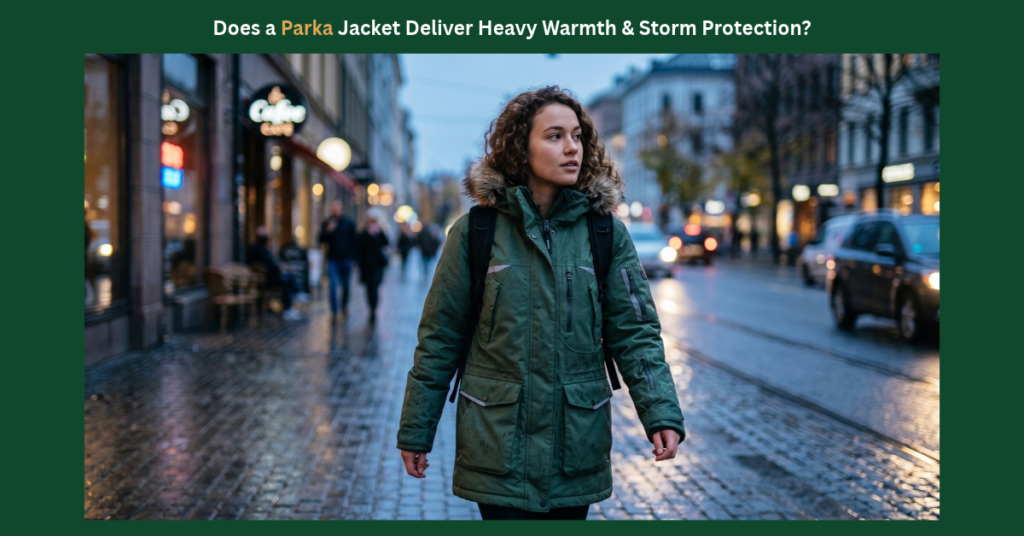
Does a Parka Jacket Deliver Heavy Warmth and Storm Protection?
A parka jacket generally delivers substantial warmth and storm protection by combining an extended, draft-blocking silhouette with high-capacity insulation and a weather-resistant shell.
The extra length, insulation, hood structure, storm flaps, cuffs, and drawcords explain why a true winter parka is heavier and bulkier than a standard jacket. Those same features also explain why a parka is better suited to severe cold and low-output exposure than to fast aerobic movement.
This guide evaluates the structural mechanics of a parka jacket to validate its thermal retention, explain its storm-grade shell capabilities, and audit the specialized hardware designed for severe weather.
How Extended Thigh-Length Coverage Defines the Parka Blueprint
A parka’s defining structural feature is its extended thigh-length silhouette, which helps minimize core heat loss by mechanically blocking waistline drafts.
The origins of the extended silhouette for sub-zero torso and upper-leg protection
A longer hem increases the amount of the body covered by insulation and shell fabric. Compared with a waist-length jacket, a thigh-length parka overlaps more of the hips and upper legs and reduces the amount of exposed space between upper- and lower-body winter layers.
Current severe-weather parkas illustrate this extended coverage. Outdoor Research lists a 35-inch center-back length for its Stormcraft Down Parka, while Canada Goose uses long, insulated parka constructions for static cold-weather protection.[3][4]
How covering the waistline helps prevent the updraft heat loss common in cropped jackets
A cropped jacket ends near the waist, so wind can reach the hem more easily when the wearer bends, sits, or moves. A longer parka places the hem farther below the waist, which creates more overlap and makes direct vertical draft entry more difficult.
The effect is mechanical: length increases coverage, while waist drawcords and hem adjustment can tighten the garment around the body to reduce internal air movement.[3][4]
The mobility trade-off: how increased surface area creates a heavier, less agile garment
Extra shell fabric, insulation, lining, pockets, storm hardware, and a longer zipper all add material. That increases weight and bulk compared with a cropped insulated jacket.
For walking, commuting, wildlife observation, or standing outdoors, that bulk can be acceptable. During high-output movement, heavier insulation can trap more heat than the wearer needs. REI recommends lighter or more breathable insulated systems for energetic activities such as running, biking, cross-country skiing, and snowshoeing.[1]
| Feature | Cropped Winter Jacket | Thigh-Length Parka |
|---|---|---|
| Draft Protection | Lower coverage at the waist | Higher coverage because the hem extends below the waist |
| Upper Leg Warmth | Little or no coverage | Covers hips and upper thighs |
| Mobility | High | Moderate; extended fabric can limit very wide strides |
How Does the Parka Maximize Warmth in Sub-Zero Climates?
A parka maximizes warmth in severe cold by combining substantial insulation volume with extended body coverage and draft-control features.
The role of high-fill down versus dense synthetic insulation in trapping radiant heat
Down and synthetic insulation both work by creating air spaces that slow heat loss from the body. Down is valued for a high warmth-to-weight ratio and compressibility, while synthetic insulation is heavier but continues to provide useful warmth when damp.[1][2]
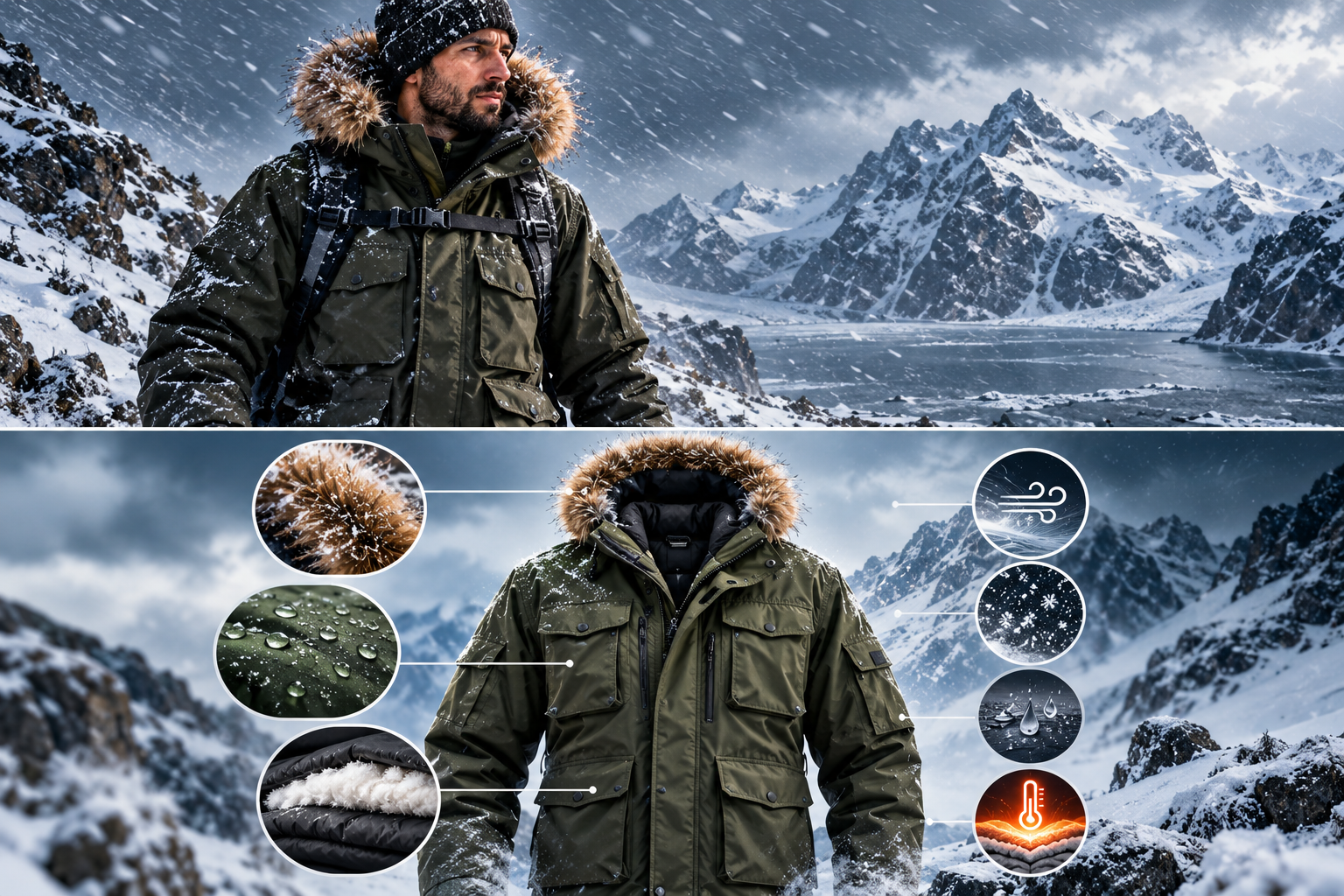
That difference matters in parkas because the garment may be worn for long periods in snow, wind, or changing moisture conditions. The correct insulation choice therefore depends on whether low weight or damp-weather reliability matters more.
Why the total fill weight of a parka can exceed standard winter jackets
A longer garment has more surface area to insulate. To maintain a similar level of loft across the torso, hips, hood, and upper thighs, the design may require more total insulation than a shorter jacket.
Fill power alone does not establish a universal temperature rating. REI notes that finished-jacket warmth also depends on fill weight, construction, shell material, weather, layering, and the wearer.[2]
The thermal boundary: why a heavy parka can overheat during high-output activity
A heavy parka is designed to retain heat. During running, uphill travel, ski touring, or other aerobic activity, the body generates much more heat and moisture than it does while standing still.
That is why a heavily insulated parka is usually a poor choice for sustained high-output exercise. REI points toward more breathable synthetic systems for energetic winter activities where sweat management matters.[1]
How Heavy-Duty Face Fabrics Defend Against Severe Winter Storms
Storm protection depends on more than insulation: a severe-weather parka needs an outer shell that resists wind, manages precipitation, and protects the insulation from saturation.
Understanding hydrostatic head ratings for waterproof and windproof shells
Hydrostatic-head testing measures how much water pressure a fabric can withstand before leaking. Patagonia describes its waterproof test as a column of water measured in millimeters applied to fabric under pressure.[6]
That metric belongs to the waterproof shell system, not to the word “parka” itself. There is no single universal hydrostatic-head number that makes every garment “blizzard grade”; seams, membranes, face fabrics, durability, and garment construction must also work together.
The role of DWR (Durable Water Repellent) coatings in preventing outer layer freezing
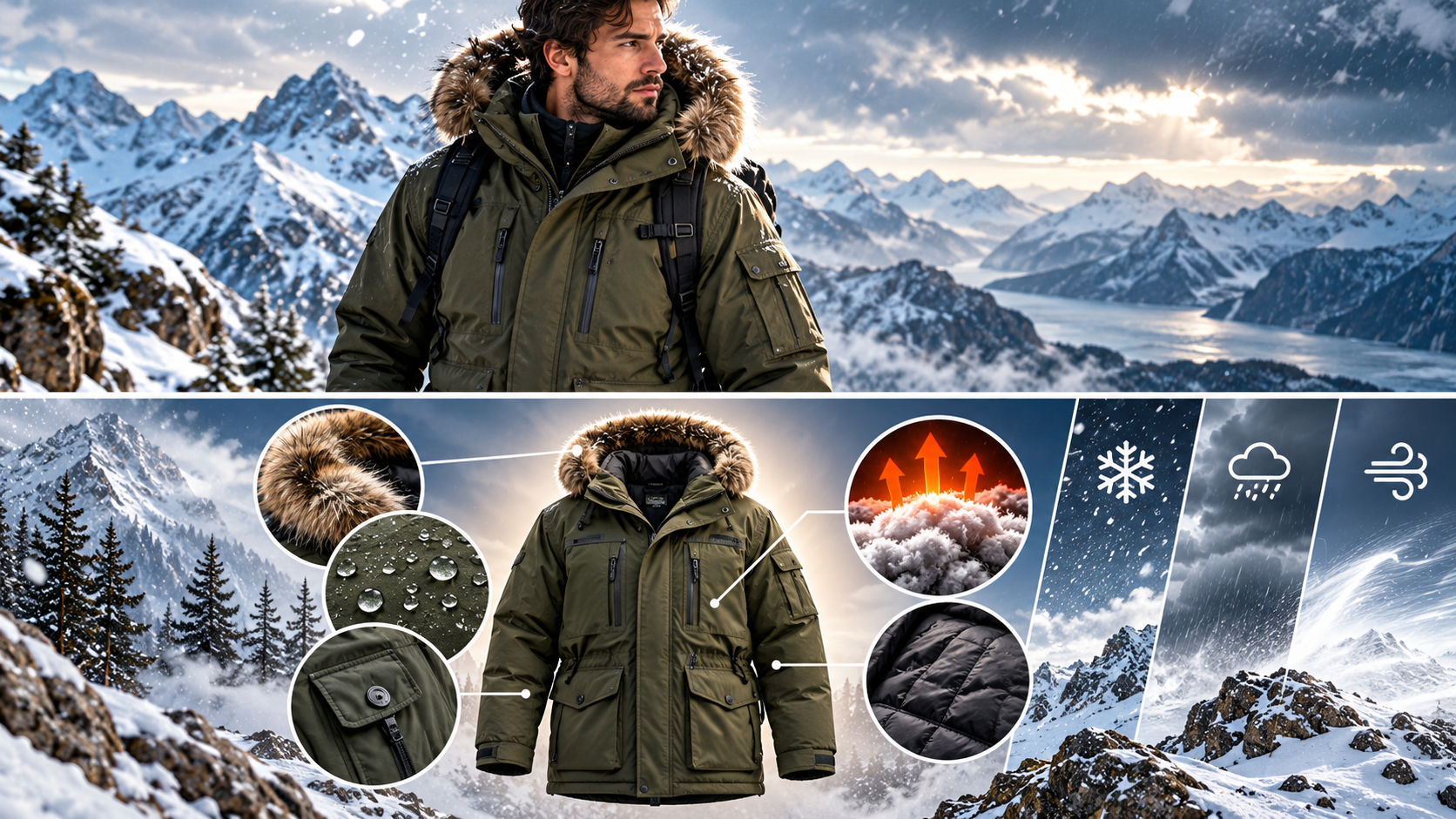
A DWR finish lowers the surface energy of the face fabric so water beads and rolls away instead of immediately soaking the textile. GORE-TEX emphasizes that DWR improves surface repellency and comfort, while the membrane is what provides waterproofness in a waterproof garment.[5]
This distinction matters in a parka. A DWR treatment can help melting snow shed from the outer fabric, but DWR alone does not turn a non-waterproof insulated coat into a storm shell.
How thick denier nylon and canvas resist physical abrasion from ice and heavy sleet
Severe-weather parkas often use more substantial face fabrics than ultralight insulated jackets. Outdoor Research specifies a 150-denier polyester canvas GORE-TEX shell on its Stormcraft Down Parka, while its lighter Transcendent Down Parka uses a 20-denier recycled nylon shell.[3][7]
Those examples show a design trade-off rather than a universal durability law. Higher denier can indicate a heavier yarn, but weave, fiber type, coatings, reinforcements, and construction also influence real abrasion resistance.
The Critical Storm Hardware That Differentiates a True Parka
A severe-weather parka uses specialized hardware and closure systems to reduce openings where wind, snow, and cold air can enter.
How fur-lined or snorkel hoods create microclimates to protect the face from windchill
A deep hood extends coverage around the head and sides of the face. Canada Goose currently uses adjustable down-filled and snorkel-style hoods on multiple cold-weather parkas, while Outdoor Research uses high-coverage insulated hoods on waterproof parkas.[3][4][8]
These designs reduce direct wind exposure and create more protected space around the face. This article does not claim that any hood design guarantees frostbite prevention; that would require medical evidence beyond the sources used here.
The function of internal storm flaps and heavy-duty zippers in sealing out horizontal rain
The front zipper is a structural opening through the garment. A storm flap adds another layer of fabric over or behind that opening so moving air and precipitation do not have a direct path through the closure.
Patagonia’s Stormshadow Waterproof Down Parka uses both external and internal storm flaps, and Outdoor Research lists an insulated storm flap over a two-way front zipper on the Stormcraft Down Parka.[3][9]
Why ribbed storm cuffs and internal waist drawcords are utilized for draft exclusion
Internal cuffs narrow the sleeve opening at the wrist, while waist or hem drawcords let the wearer pull excess volume closer to the body.
Current expedition-style parkas use these features together: Canada Goose lists recessed rib-knit cuffs and an interior waist drawcord, while Outdoor Research uses internal knit wrist gaiters and an elastic drawcord hem.[3][4]
Parka vs. Puffer Jacket: Which Delivers Better Winter Protection?
Puffer jackets prioritize low weight and packability, while severe-weather parkas prioritize coverage, shell protection, and draft-control hardware.
| Feature | Parka Jacket | Puffer Jacket |
|---|---|---|
| Warmth Coverage | High; torso, hips, and often upper thighs | Usually shorter and more compact |
| Wind & Storm Resistance | Can be high with waterproof/windproof shell and storm hardware | Varies; many lightweight puffers are water-resistant rather than waterproof |
| Weight / Packability | Poorer; heavier and bulkier | High; often highly compressible |
| Mobility | Low to moderate | High |
Compare extreme weather coverage and shell durability versus lightweight packability
A puffer can be an excellent insulating layer, but many lightweight puffers use thin face fabrics and prioritize compressibility. A storm parka can combine insulation with a waterproof or windproof shell, taped seams, longer coverage, and protective hardware.[1][3][9]
That does not mean every parka is more durable than every puffer. Product construction varies, so comparisons should be made using the actual shell fabric, membrane, seam construction, and intended activity.
Compare heavy wind resistance versus high-mobility warmth
For static exposure, a longer parka can keep more of the body covered and reduce draft entry. For active movement, a shorter insulated jacket is easier to ventilate, layer, and pack.
REI’s activity guidance reflects this split: heavier insulated pieces are useful for low-output cold exposure, while synthetic or more breathable insulated jackets are better suited to energetic winter movement.[1]
Final Verdict: When Is a Parka the Right Winter Investment?
A parka is a strong investment for static exposure and severe winter weather, but its heavy insulation and extended coverage make it less suitable for sustained high-output activity.
Ideal scenarios for static exposure, extreme windchill, and heavy snowstorms
A parka makes the most sense when warmth retention and weather coverage matter more than packability: winter commuting, standing outdoors for long periods, observing wildlife, or spending time in exposed cold environments.
Purpose-built examples combine long coverage, insulated hoods, drawcords, internal cuffs, storm flaps, and waterproof or highly weather-resistant shells to protect during extended exposure.[3][4][9]
When to bypass a parka for shorter, high-output active winter layers
For winter hiking, ski touring, running, or other sustained aerobic activity, a heavy parka can trap excess heat and moisture. A breathable insulation layer paired with a waterproof shell gives more control over heat and precipitation.[1][10]
The parka is therefore best understood as a coverage-first severe-weather system: choose it when insulation, wind control, and storm protection matter more than low weight and unrestricted movement.
Sources
- REI Expert Advice. How to Choose Insulated Jackets. View source.
- REI Expert Advice. What Is Down Fill Power?. View source.
- Outdoor Research. Men’s Stormcraft Down Parka. View source.
- Canada Goose. Expedition Parka. View source.
- GORE-TEX. Durable Water Repellent (DWR) in GORE-TEX Products. View source.
- Patagonia. H2No Performance Standard. View source.
- Outdoor Research. Women’s Transcendent Down Parka. View source.
- Canada Goose. Trillium Parka. View source.
- Patagonia. Men’s Stormshadow Waterproof Down Parka. View source.
- Outdoor Research. Choosing the Right Outdoor Jacket. View source.
Evidence note: This article does not assign a universal temperature rating to parkas, does not define a single hydrostatic-head threshold as “blizzard grade,” does not claim that a hood guarantees frostbite prevention, and does not treat denier alone as a universal durability score.