
Does a Denim Jacket Offer Style, Comfort, and Light Protection?
A denim jacket offers a proven combination of structural durability and versatile style, but its true comfort and light protection depend heavily on the type of denim, how the fabric has been finished, and the weather in which it is worn.
That distinction matters. Buyers sometimes expect a denim jacket to feel soft immediately or provide the warmth of a dedicated winter layer. Traditional rigid denim can feel stiff at first, while unlined cotton denim provides limited insulation and is not designed to keep rain out.
A denim jacket works best as durable casual outerwear for dry, mild conditions. Its dense cotton twill handles everyday friction well, its structured shape works across a wide range of casual outfits, and the fabric becomes more personal as indigo fades with use.
This guide evaluates the cotton twill construction of a denim jacket to validate its style versatility, explain the break-in process for comfort, and define the boundaries of its light protection.
How Cotton Twill Construction Creates a Durable Structural Layer
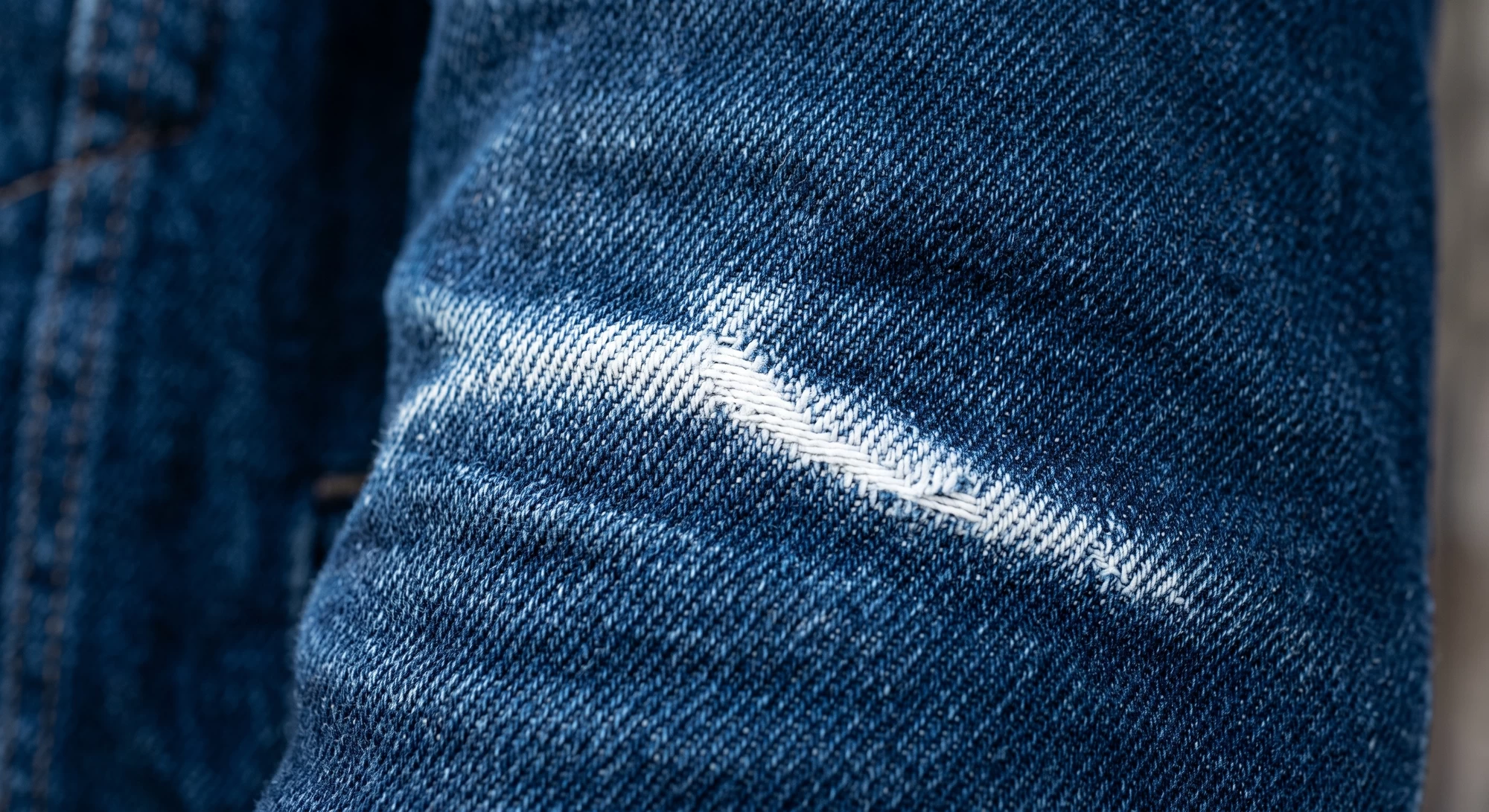
Denim’s durability starts with its cotton twill construction. Rather than using a simple plain weave, traditional denim commonly uses structures such as 3 × 1 or 2 × 1 twill, creating the diagonal surface lines associated with the fabric. [1]
Jacket denim also tends to use heavier fabric than denim intended for lightweight shirts and tops. CottonWorks notes that jeans and jackets commonly use heavier denim constructions, although exact fabric weight varies between products. [1]
The result is a fabric that can tolerate repeated wear better than many lightweight apparel fabrics. That does not make a standard denim jacket protective equipment. Its strength depends on yarn size, fabric density, weave, finishing, and garment construction.
The warp-and-weft weave that provides high snag and tear resistance
A woven fabric is created by interlacing two yarn systems. Warp yarns run lengthwise, while weft, also called filling yarns, crosses them.
In a common 3 × 1 denim twill, each warp yarn passes over three filling yarns and under one. The sequence shifts between adjacent warp yarns, producing the diagonal twill line. [1]
This structure matters because denim performance comes from more than cotton fiber alone. Yarn size, the number of yarns packed into the fabric, and the twill arrangement determine how dense and substantial the finished material feels.
Denim should therefore be described as abrasion resistant in a practical apparel sense, not as tear-proof. Laboratory research on denim shows that abrasion changes surface appearance and tensile properties over time, confirming that repeated friction still damages the fabric. [2]
For everyday wear, that density provides useful resistance against minor scrapes, brush, rough seating surfaces, and repeated contact. It is one reason denim developed a reputation for structural longevity.
How heavy indigo dyeing affects the initial stiffness and structure of the fabric
Classic blue denim has another distinctive feature: indigo dye does not normally color the yarn uniformly through its core.
CottonWorks explains that traditional indigo dyeing concentrates color in the outer layers of the warp yarn. This produces a ring of blue around a lighter core, a process known as ring dyeing. [3]
This structure helps explain denim’s characteristic fading.
As the outer dyed layers experience friction, small amounts of surface color are removed and the lighter inner portions become increasingly visible. Areas that bend and rub most frequently therefore change sooner than protected areas.
Raw denim often feels especially rigid because it has not undergone the washing and distressing processes normally used to soften finished denim. Levi’s describes raw denim as initially stiff and notes that it softens and changes with wear. [4]
The stiffness of a particular jacket does not come from indigo alone. Fabric weight, sizing, finishing, washing, yarn construction, and fiber content all contribute to the initial feel.
What Makes the Denim Jacket a Versatile Style Standard?
The denim jacket achieves much of its style versatility through a structured silhouette, visible hardware, recognizable cotton texture, and a surface that develops character with wear.
Unlike a soft knit layer, denim tends to hold its shape around the collar, chest, shoulders, and pockets. That structure gives the garment visual definition without requiring formal tailoring.
Its usefulness is also relatively independent of short-term fashion details. Dark, clean denim can sit beside chinos, knitwear, plain shirts, and simple trousers. Washed denim reads more casually and pairs naturally with relaxed clothing.
Style still depends on fit, color, wash, hardware, and the rest of the outfit. The fabric itself does not make every denim jacket appropriate for every dress code.
How the structured collar and metal hardware elevate casual layering
A typical denim jacket uses a firm collar, visible seams, structured chest panels, and metal buttons or snaps.
Those elements create sharper visual boundaries than a hoodie or soft sweatshirt. The jacket keeps a recognizable outerwear shape even when worn over a lightweight shirt.
Hardware also changes the character of the garment. Metal buttons add contrast to cotton twill and reinforce the utilitarian construction associated with classic denim garments.
The result is structured casualwear rather than formal tailoring.
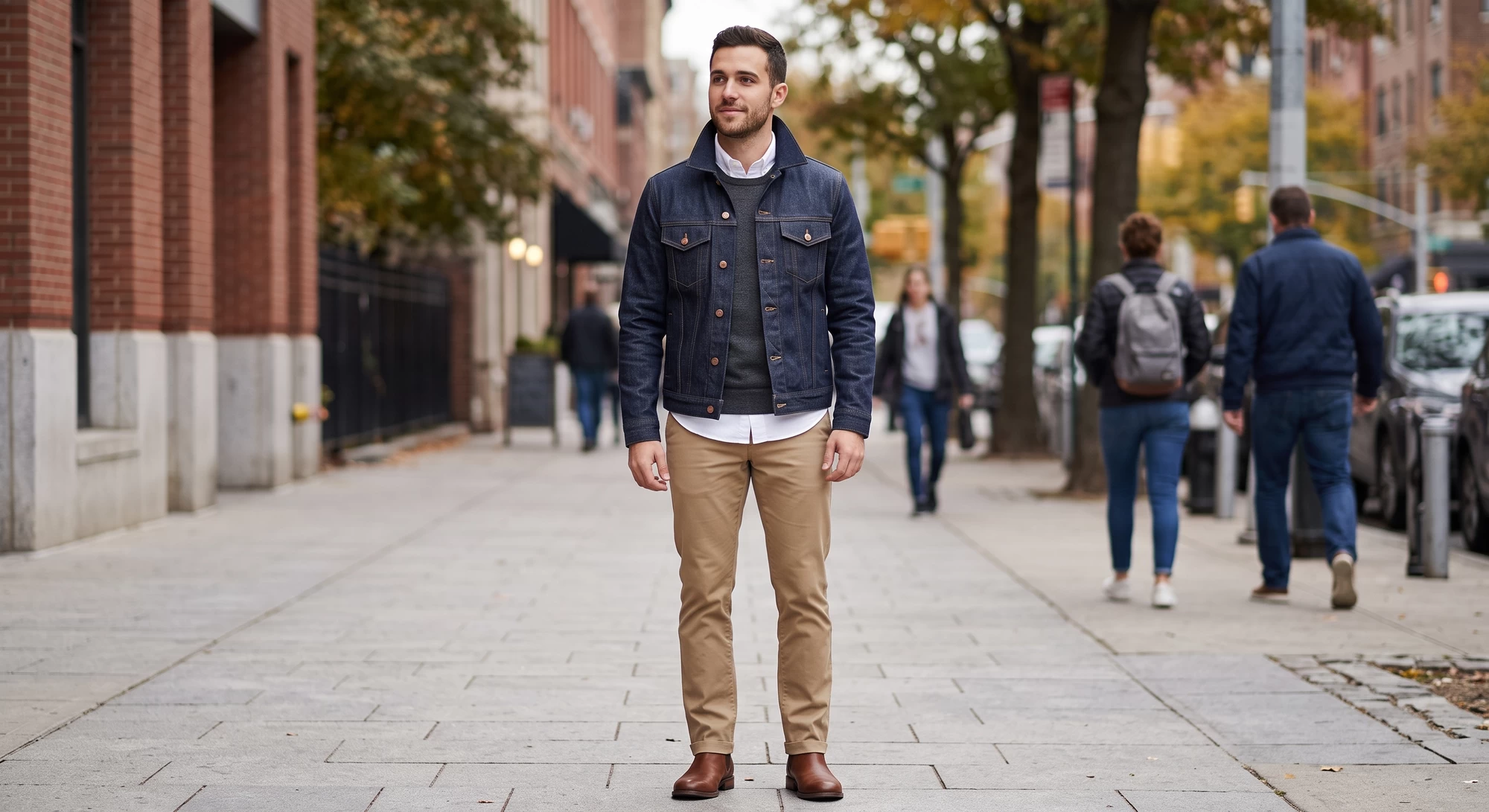
That makes denim useful as a transitional layer. It can sit over a T-shirt without looking as soft as knitwear, while still remaining more relaxed than a blazer or wool coat.
The aesthetic fading process that molds the jacket to the wearer over time
Indigo denim changes visually as it is worn.
Because much of the indigo sits toward the outer portion of the yarn, repeated friction gradually exposes lighter material beneath the dyed surface. [3]
Elbows, cuffs, seams, pocket edges, and other high-movement areas tend to experience more rubbing. Over time, these areas can become lighter than sections exposed to less friction.
Raw denim makes this effect particularly visible. Levi’s notes that untreated denim develops signs of wear that reflect the user’s movements and habits. [4]
This aging process gives denim a quality that many uniform synthetic fabrics do not share. Wear changes the appearance instead of simply making the garment look older.
Fading is still a visual preference rather than an objective performance advantage. Some buyers want pronounced contrast. Others prefer pre-washed denim that changes more slowly.
When to choose raw, unwashed denim versus pre-faded washes for specific dress codes
Raw and dark indigo denim usually creates the cleanest denim-jacket appearance.
The darker surface, limited distressing, and sharper structure make it easier to combine with smart-casual clothing where heavily faded or torn denim would look too informal.
Raw denim comes with a comfort trade-off. Because it has not been pre-washed or heavily softened, it can feel rigid during early wear. Levi’s describes raw denim as stiff initially and notes that it gradually molds to the wearer’s body and movement. [4]
Pre-washed or pre-faded denim reduces that adjustment period.
A medium or light wash generally creates a more relaxed look and often feels softer immediately because finishing has already altered the fabric.
The decision is therefore partly aesthetic and partly practical. Choose rigid dark denim if you value a cleaner appearance and gradual personalized fading. Choose washed denim if immediate softness and a casual appearance matter more.
Does Denim Provide Immediate Comfort or Require a Break-In Period?
Traditional rigid cotton denim often requires some wear before it reaches its most comfortable state. Stretch denim changes that experience by incorporating elastic fibers that improve flexibility and freedom of movement.
There is no universal break-in schedule.
Fabric weight, yarn structure, finishing, garment fit, washing, and frequency of wear all influence how quickly a denim jacket softens. For that reason, claims that every rigid denim garment takes a fixed number of days to break in are not reliable.
Why 100% rigid cotton feels restrictive and abrasive during initial wear
Rigid denim contains no elastane to provide substantial elastic extension.
If the fabric is heavy and minimally washed, the combination of dense twill construction and limited finishing can make the garment resist bending more strongly during initial wear.
This becomes most noticeable around moving areas such as the shoulders, upper back, elbows, and underarms.
Fit matters just as much as material.
A properly sized rigid denim jacket may initially feel firm while still allowing functional movement. A jacket cut too tightly across the shoulders will remain restrictive even after the fabric softens.
Raw denim is the clearest example. Levi’s notes that untreated raw denim feels stiff initially before becoming softer with wear. [4]
How body movement and wear soften the fabric over time
Rigid denim becomes easier to move in as repeated wear flexes the material.
Elbows bend. Shoulders move. The torso folds when sitting. These repeated motions create creases and gradually change the way the fabric drapes.
Levi’s describes raw denim as softening after continued wear and developing creases specific to the wearer. [4]
Washing and finishing also affect stiffness, so wear alone is not responsible for every change in comfort.
The useful point is simple. Rigid denim usually does not feel identical on the first day and after extended use.
That changing feel is part of the reason some buyers prefer rigid denim. Others may find the initial stiffness unnecessary and prefer stretch or pre-washed fabric.
The role of elastane blends in improving arm mobility
Stretch denim incorporates elastane or another elastic component into the fabric structure.
Research on denim shows that elastane-containing fabrics improve elasticity and freedom of movement. The amount and construction of the elastic yarn also affect recovery, shape retention, and long-term performance. [5]
This makes stretch denim particularly useful in a jacket where shoulder and arm movement matter.
The trade-off is structural behavior.
Research has found that elastane composition and repeated abrasion influence stretch-denim recovery and shape retention. More stretch therefore does not automatically mean better long-term structure. [5]
There is no need to assume every stretch jacket contains the same elastane percentage. Composition varies by product, and the fiber-content label provides the reliable answer for a specific jacket.
Denim Break-In and Comfort Comparison
| Denim Type | Initial Feel | After Continued Wear | Long-Term Comfort |
|---|---|---|---|
| 100% Rigid Cotton | Firm and potentially restrictive, especially in heavier raw denim | Fabric gradually flexes, creases develop, and the garment begins conforming more closely to movement | Can become substantially softer and more personalized, but retains less stretch than elastane blends |
| Elastane Blend | More flexible from the start | Continues adapting while elastic yarn supports movement | High mobility, though stretch recovery and shape retention depend on fabric construction and wear |
The table describes typical behavior rather than a fixed timeline. Raw-denim break-in varies too much to assign the same number of days or weeks to every jacket.
What Are the Exact Boundaries of Denim’s Light Protection?
A denim jacket provides useful light protection against everyday abrasion and some minor wind exposure, but standard unlined denim is not a dependable thermal or rain barrier.
This definition matters.
“Light protection” does not mean motorcycle-grade abrasion protection, winter insulation, waterproofing, or personal protective equipment. It means the dense woven layer offers more physical separation from the environment than a lightweight shirt.
Abrasion resistance against scrapes, brush, and everyday environmental contact
Denim’s dense woven construction provides practical resistance to surface wear.
Research on denim routinely evaluates abrasion alongside tensile and tearing properties because repeated friction directly affects fabric durability. [2]
For ordinary use, a denim jacket can protect the skin and clothing underneath from light brush, rough surfaces, and minor scrapes better than a thin shirt.
The limit is important.
Standard fashion denim should not be treated as certified protective equipment for motorcycling, industrial hazards, severe falls, or environments requiring tested abrasion performance.
Those uses require garments designed and rated for the relevant hazard.
The thermal limitation: why unlined denim is not a true insulating layer
An unlined denim jacket provides some physical coverage, but it does not use high-loft insulation.
Dedicated cold-weather insulation works by maintaining substantial volumes of relatively still air within materials such as fleece, down, or synthetic fill.
Standard denim is comparatively dense and flat.
That does not mean denim has literally zero thermal resistance. All clothing materials affect heat transfer to some degree, and denim research measures meaningful differences in thermal resistance according to fabric structure, weight, elastane content, and laundering. [6]
The practical conclusion is narrower.
An unlined denim jacket should not be chosen as a replacement for fleece, down, or purpose-built insulated outerwear in freezing conditions.
For cool but not severe weather, it can work over warmer base or mid-layers.
The moisture limitation: how cotton behaves when exposed to rain
Cotton is hydrophilic, meaning it has an affinity for water. Cotton Incorporated defines hydrophilic fibers as fibers capable of absorbing water. [7]
That characteristic is useful for comfort in many garments because cotton can absorb moisture.
It creates a disadvantage in sustained rain.
Untreated denim does not contain a waterproof membrane, so water can penetrate and be absorbed by the cotton structure. As the jacket becomes wet, it becomes less comfortable and can take time to dry.
Denim’s moisture behavior also changes with composition and finishing. Research comparing rigid, stretch, resin-treated, bleached, and softened denim found that fiber composition and finishing significantly affected wicking, drying, and water-vapor permeability. [8]
Calling denim waterproof is therefore inaccurate unless the specific jacket has been given a separate waterproof construction or treatment.
Denim Protection Threshold Table
| Protection Type | Denim Capability | Reason |
|---|---|---|
| Abrasion / Minor Scrapes | Good for everyday apparel use | Dense cotton twill provides a substantial woven barrier, although abrasion still damages the fabric over time |
| Wind Resistance | Limited to Moderate | Dense denim can reduce light airflow, but standard jackets lack a dedicated windproof membrane |
| Thermal Insulation | Limited when unlined | Denim lacks the high loft used by fleece, down, and insulated fills to retain large volumes of still air |
| Rain / Water Resistance | Poor when untreated | Hydrophilic cotton absorbs moisture, and ordinary denim lacks a waterproof membrane |
These ratings describe standard denim outerwear. Lined, coated, waxed, insulated, or technically modified denim jackets can behave differently.
Final Verdict: When Is a Denim Jacket the Right Choice?
A denim jacket is an excellent choice for dry, transitional climates where abrasion durability and adaptable style matter more than strong weather protection.
Its strengths are clear.
Cotton twill provides a substantial outer layer. Indigo denim develops a personalized appearance with wear. Rigid constructions soften over time, while stretch denim offers easier movement from the beginning.
Its limits are equally important.
Standard unlined denim does not provide the loft of dedicated insulation and untreated cotton is poorly suited to sustained rain.
Ideal scenarios for dry, transitional climates and high-abrasion daily wear
Denim makes the most sense in mild, relatively dry conditions.
Spring and autumn are natural examples because the jacket adds a substantial layer without the bulk of a winter coat.
It also suits everyday situations involving moderate friction. Commuting, casual outdoor tasks, workshops, travel, and general daily wear can benefit from the fabric’s dense construction.
Comfort preference should guide fabric choice.
Choose rigid denim if you value structure, traditional fading, and a garment that changes noticeably through wear.
Choose stretch denim if unrestricted shoulder and arm movement matters from the first wear.
Choose pre-washed denim if you want a softer feel without waiting for a rigid fabric to relax.
When to bypass denim for insulated mid-layers or waterproof shells
Choose another outerwear system when the environmental problem exceeds what denim is designed to handle.
In freezing weather, a fleece, down jacket, synthetic insulated jacket, or another lofted layer provides a more appropriate insulation structure.
In sustained rain, a waterproof shell provides protection that untreated cotton denim cannot.
Strong cold, heavy precipitation, and technical hazards should therefore be treated as separate performance requirements rather than situations where a denim jacket simply needs to be thicker.
A denim jacket works best when its real strengths match the conditions: durable cotton twill for everyday wear, a structured and adaptable appearance, comfort that can improve with use, and light physical protection in dry, moderate weather.
References
- CottonWorks, “Denim Basics” and “Basic Woven Fabric Designs.” Technical explanations of denim construction, warp and filling yarns, denim weights, and common twill structures. CottonWorks Denim Basics
- International Journal of Clothing Science and Technology, “Effect of anisotropic abrasive damage on mass loss and ultimate tensile properties of the stretch denim fabric.” Research examining abrasion, surface appearance, and tensile performance in denim.
- CottonWorks, “Denim Construction.” Technical explanation of indigo ring dyeing and the concentration of indigo in the outer layers of denim warp yarns. CottonWorks Denim Construction
- Levi’s, “What Is Raw Denim?” and “How to Break in Raw Denim Jeans?” Guidance describing the initial stiffness of untreated denim, its gradual softening, and wear-specific fading.
- International Journal of Clothing Science and Technology and Materials, research on stretch-denim elasticity, abrasion, recovery, and elastane-related comfort.
- Materials, “Influence of Washing on the Thermal Comfort Parameters of Denim Fabrics with Varying Elastane Content.” Research measuring thermal resistance, air permeability, and comfort changes in denim.
- Cotton Incorporated, Textile Glossary and Cotton Today. Sources defining hydrophilic fiber behavior and cotton’s affinity for moisture.
- International Journal of Clothing Science and Technology, “The effects of elastane and finishing properties on wicking, drying and water vapour permeability properties of denim fabrics.”