
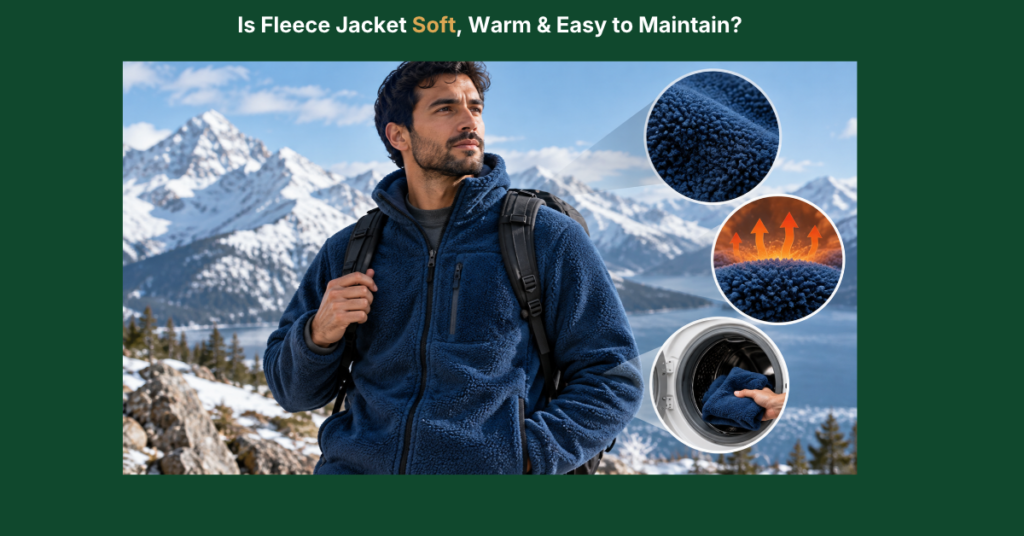
Is a Fleece Jacket Soft, Warm, and Easy to Maintain?
A fleece jacket is usually soft, warm for its weight, and fairly simple to care for. Its raised synthetic pile holds insulating air close to the body, but the same textured surface can pill with friction, lose some loft with wear, and allow wind to pass through. How long a fleece keeps its original feel depends on its construction, finish, use, and care.
That distinction matters if you are judging fleece after years of use rather than trying on a new jacket. Fresh fleece often feels plush and warm. Repeated rubbing, washing, drying, and exposure to heat can change the surface.
This article looks at the material itself, why fleece feels soft, how it traps heat, what causes pilling, how to wash it, and how its practical strengths compare with wool.
How Synthetic Engineering Creates the Signature Fleece Texture
Most synthetic fleece is made from polyester. Polyethylene terephthalate, usually shortened to PET, is the polyester polymer widely used to make synthetic textile fibers. Polyester can be engineered into different filament sizes, yarn structures, shapes, and finishes, which helps explain why one fleece can feel very different from another.
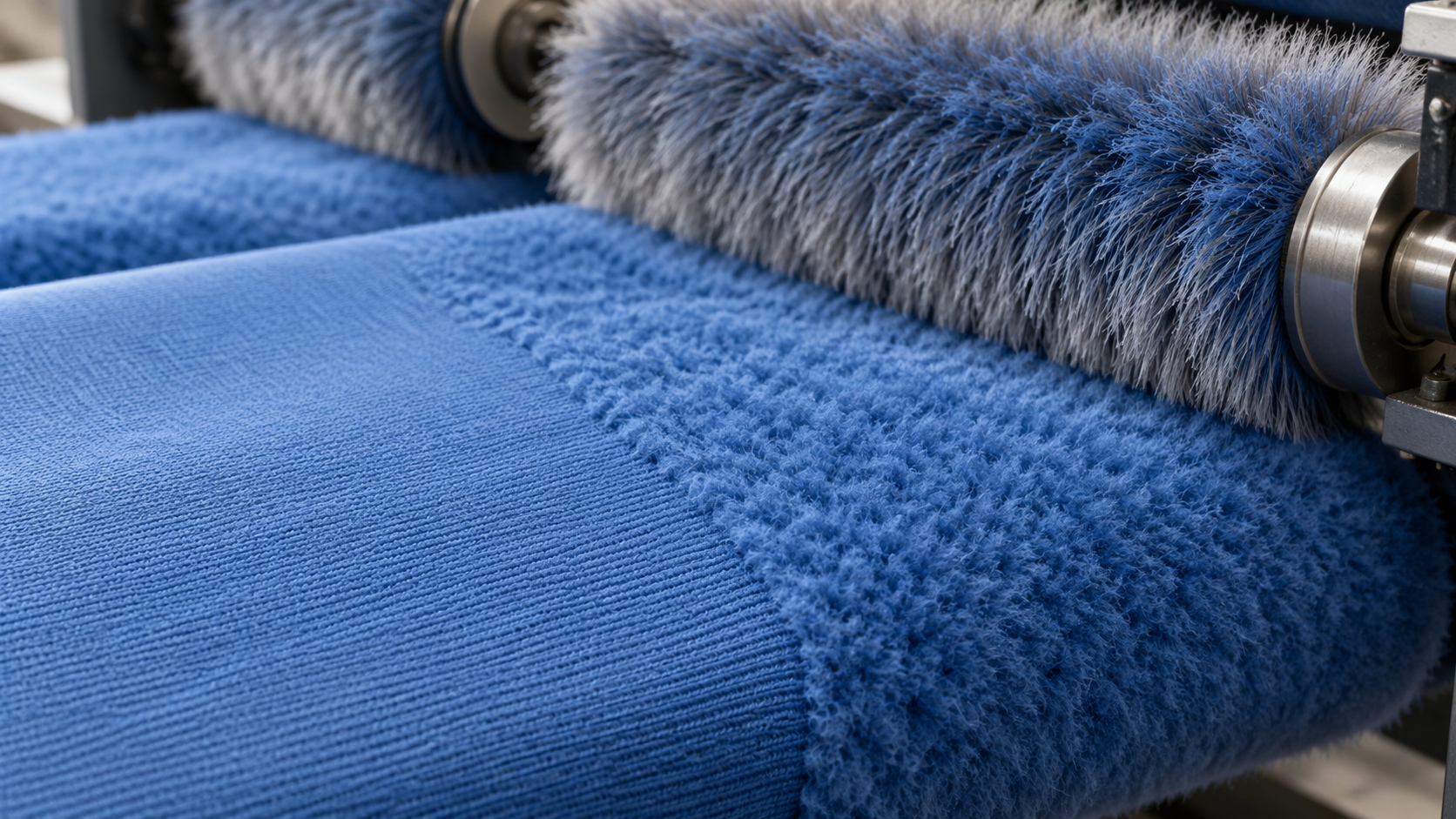
Fleece gets much of its familiar texture after the fabric surface is raised or napped. Research on fleece manufacturing describes rotating cylindrical brushes lifting and separating surface fibers into a fuzzy layer. The fabric may then be sheared to make the pile more even.
Polyethylene terephthalate (PET) is a thermoplastic polyester used extensively in synthetic textile fibers. The name describes the polymer, not one specific fleece construction. A fleece jacket may use different yarn types, fabric weights, pile heights, blends, and finishing methods.
Why spun polyester pile mimics the feel of natural wool
The comparison with wool comes mainly from function rather than identical structure.
A raised polyester surface creates many projecting fibers and spaces between them. This produces the thick, soft nap associated with fleece. The fuzzy layer also contributes to warmth by increasing the amount of air held within the fabric structure. Textile research describes this raised layer as a major reason fleece feels soft and warm.
Not every fleece uses exactly the same type of spun polyester yarn. Polyester textiles can be engineered in several forms, including different filament and staple-fiber constructions. It is more accurate to judge the finished fabric than to assume every fleece follows one manufacturing formula.
Natural wool reaches similar practical goals through a very different fiber structure. Wool has natural crimp and a complex protein-based fiber structure that contributes to insulation, moisture management, and softness in fine fibers. Fleece imitates some of those functions, but it does not reproduce wool fiber itself.
How the fabric brushing process creates a plush, skin-friendly surface
Brushing changes how fleece feels against the skin.
During napping, rotating brushes raise fibers from the fabric and form a fuzzy surface. In some fleece constructions, loops are opened during this process and the resulting pile is later sheared to produce a more uniform surface.

This creates the plush hand people associate with a new fleece jacket. Instead of touching a flat knitted face, the skin contacts many fine projecting fibers.
The process also creates a trade-off. A raised surface contains fibers that can be exposed to rubbing and movement. That makes abrasion and pilling important when considering how the jacket will feel after repeated use.
Does Fleece Maintain Its Softness Over Years of Wear?
Fleece can remain soft for years, but abrasion is one of the main threats to its surface texture. Repeated wear, washing, and drying can encourage loose fibers to gather into small pills. Polyester pills can remain attached because synthetic fibers are relatively strong.
Fabric construction and finishing make a large difference. Two jackets made from polyester can age differently because their yarns, pile, density, and anti-pilling treatment are not the same.
How friction and daily wear cause surface pilling and texture loss
Pilling begins with fiber movement at the fabric surface.
Repeated friction can pull or loosen projecting fibers. Those fibers can twist and entangle until they form small balls on the surface. Research on fleece fabrics identifies pilling as a common surface defect, while garment-care guidance also links everyday wear, washing, and drying with pill formation.
The rubbing does not have to come from a washing machine. Backpack straps, a seatbelt, the inside of a sleeve, a desk edge, or repeated contact between layers can create local abrasion.
This does not mean every high-friction area will develop severe pilling. Fiber type, yarn structure, finishing, laundering, and the intensity of use all affect the result.
Why choosing garments with an anti-pill finish preserves long-term comfort
An anti-pill finish is intended to improve resistance to surface pilling.
There is no single anti-pilling process used for every fleece. Textile research has tested approaches such as singeing, heat setting, resin treatments, shearing, and combinations of finishing processes. The appropriate treatment depends on how the fabric is constructed.
Real products also show that anti-pilling fleece is not only a marketing concept. Patagonia, for example, specifies a double-sided anti-pilling finish on its polyester Micro D fleece.
An anti-pill finish does not guarantee a permanently smooth surface. It is better viewed as one factor that can improve resistance to visible wear.
Can fabric softener damage fleece?
Claims that fabric softener universally destroys fleece are too broad.
Different garments use different fibers, finishes, membranes, coatings, and treatments. Some technical apparel manufacturers prohibit fabric softener on specific products, but that does not establish that every liquid softener permanently damages every polyester fleece.
The practical rule is simpler. Follow the care label for the specific jacket. If the manufacturer says not to use fabric softener, avoid it. If the label does not address it, do not assume a universal rule based on advice written for a different technical fabric.
This distinction matters because a basic polyester fleece and a garment that combines fleece with specialized coatings or membranes may have different care requirements.
How Polyester Loft Traps Body Heat Without Adding Weight
Fleece keeps you warm mainly by trapping air within its raised structure. The thicker and more open the insulating layer becomes, the more space it provides for relatively still air. That air slows heat transfer between the body and colder surroundings.
This is why fleece is often described as an insulating mid-layer rather than a heat-producing material. The jacket does not create warmth. It reduces the rate at which your body loses it.
The science of loft: how synthetic air pockets trap body heat
Loft describes the thickness and volume created by an insulating material.
In fleece, raised fibers create small spaces that hold air. Relatively still air transfers heat poorly compared with rapidly moving air, so preserving that air layer contributes to insulation.
The mechanism is not absolute. Heat still moves through the garment. Fleece slows that process rather than preventing it.
Fabric weight matters too. REI distinguishes lightweight, midweight, and heavyweight fleece and notes that thicker fleece tends to provide more insulation, though added thickness also increases bulk.
Why fleece works well as an active mid-layer due to breathability
Fleece is widely used as a mid-layer because it combines insulation with relatively high air permeability and quick drying.
REI describes polyester fleece as breathable, fast drying, and able to remain useful when damp. Those properties make it practical during activities where your body produces heat and moisture.
Polyester itself has low moisture regain compared with fibers such as cotton. Textile research reports much lower water absorption for polyester fiber than cotton under comparable conditions.
That does not mean every fleece jacket is waterproof or that it actively moves moisture in exactly the same way as a fitted base layer. Moisture management depends on the complete fabric structure, garment fit, finish, and surrounding layers.
Hydrophobic polyester fibers resist absorbing large amounts of water into the fiber itself. Water can still remain between fibers or saturate parts of a garment.
The wind vulnerability: how moving air breaks the insulating layer
Breathability creates one of fleece’s clearest limitations.
Standard fleece allows air to move through its structure. In calm conditions, that can support comfort during activity. In strong wind, moving air can replace the warmer air held close to the body and increase convective heat loss.
REI describes the trade-off directly. Polyester fleece breathes well, but wind can pass through ordinary fleece and reduce warmth. Wind-resistant fleece may add a membrane or use a different construction to reduce this effect.
For cold, exposed conditions, a shell over fleece can reduce wind penetration while the fleece continues to provide insulation.
What Are the Maintenance Rules for Synthetic Fleece?
Fleece is usually easy to maintain, but there is no single washing temperature that applies to every fleece jacket.
Many polyester fleece products specify a cold machine wash and low-temperature tumble drying. Patagonia’s Micro D fleece, for example, calls for machine washing cold, tumble drying low, and no ironing. Columbia lists similar instructions for several polyester fleece jackets, including a cold gentle machine wash and low tumble dry.
Those examples support a low-stress care approach. They do not establish a universal maximum temperature for every fleece garment. The sewn-in care label remains the correct instruction for the jacket you own.
Why cold water and gentle machine cycles protect polyester pile
A lower-friction wash can help reduce wear on the raised surface.
Patagonia recommends turning fleece garments inside out before washing. This reduces contact between the fuzzy outer surface and the washing-machine drum, which can help limit pilling.
Cold or gentle cycles are also common manufacturer recommendations. Patagonia and Columbia both use these instructions on current fleece products.
There is no sound basis for saying every fleece must be washed at exactly 30°C or 86°F. Some garments may permit different conditions. Follow the label.
What high dryer heat can do to synthetic fleece
Polyester is thermoplastic, so intense heat can soften or melt the material. That does not mean an ordinary household dryer automatically melts polyester fleece.
Patagonia warns that its synthetic fleece can melt or burn when exposed to flame or direct heat. Its fleece care labels commonly call for low-temperature drying and no ironing.
The distinction between direct heat and normal garment drying matters. Polyester’s material melting temperature is far above normal cold-wash conditions, and actual fabric damage can occur through changes to pile, finish, shape, or texture before literal fiber melting becomes the relevant issue.
Use the dryer’s setting specified on the garment label rather than relying on a universal temperature threshold.
Routine fixes for static cling and pet hair accumulation
Polyester is prone to electrostatic charging through friction. Textile research has measured charge generation on polyester fibers and fabrics, with humidity, contact conditions, fabric construction, and finishing all influencing the effect. Static charge can contribute to cling and attraction of dust.
Pet hair becomes especially noticeable on fuzzy fleece because the raised surface provides many places for fibers and hair to catch.
The evidence does not justify a universal claim that one household method, such as using a metal hanger, permanently solves static. Reducing friction, following the garment’s care directions, and avoiding excessive drying are more defensible general practices.
Fleece Care Warning Table
| Care step | Practical guidance | Why it matters |
|---|---|---|
| Wash | Turn fleece inside out and use the cycle specified on the care label. Cold and gentle cycles are common manufacturer recommendations. | Reduces unnecessary abrasion on the raised surface. |
| Dry | Use the drying method and temperature on the care label. Low tumble drying is common for polyester fleece. | Helps limit unnecessary heat exposure. |
| Iron | Do not iron when the care label prohibits it. | Direct heat can damage thermoplastic synthetic fibers. |
| Fabric softener | Follow the specific garment instructions rather than assuming one rule applies to all fleece. | Finishes and garment constructions differ. |
| Pilling prevention | Reduce unnecessary friction during washing and wear. | Friction contributes to fiber entanglement and pilling. |
Fleece vs. Wool: Which Insulator Is Easier to Manage?
Fleece and wool can both serve as insulating layers, but neither material has one fixed performance level.
Fleece is usually quick drying and breathable, while wool offers strong moisture-management and natural odor-resistance properties. Care requirements vary within both categories.
The comparison should therefore focus on the actual garment rather than treating every fleece jacket and every wool sweater as equivalent.
Material Comparison Matrix
| Feature | Synthetic Fleece | Natural Wool |
|---|---|---|
| Warmth-to-weight | Often favorable, but depends on fleece weight, loft, and construction. | Varies with fiber type, fabric density, knit, weight, and garment design. |
| Maintenance | Many fleece garments are machine washable. Follow the care label. | Many wool garments are also machine washable. Others require hand washing or dry cleaning. |
| Odor resistance | Polyester can retain more body odor than wool in comparative testing. | Wool has documented natural odor-management properties. |
| Damp conditions | Fleece dries quickly and can retain useful insulation when damp. | Wool manages moisture vapor and can continue providing insulation in damp conditions. |
| Wind resistance | Ordinary porous fleece can allow substantial airflow. Wind-resistant versions differ. | Depends heavily on knit, weave, density, and garment construction. |
Comparing warmth-to-weight ratios in dry and wet conditions
It is tempting to say fleece is always lighter than wool for the same warmth, but that claim requires controlled garment-level testing.
A lightweight synthetic fleece and a heavy wool sweater clearly differ in weight, but that comparison tells you little about the fibers themselves. Fabric thickness, density, knit, pile, fit, and construction all influence insulation.
Fleece does have practical advantages for active layering. Polyester absorbs relatively little moisture into the fiber and fleece dries quickly. Wool can absorb substantial moisture vapor while still helping regulate the wearer’s microclimate.
Those are different moisture-management mechanisms. Neither supports a universal statement that one material provides identical warmth at a lower weight in every garment.
Comparing machine-wash convenience with wool care
Fleece often has simple care instructions. Current polyester fleece garments from major manufacturers commonly allow machine washing.
Wool is more varied than the common “dry-clean only” stereotype suggests.
Woolmark states that many modern wool garments can be safely machine washed when their care labels permit it. Other wool items require hand washing, while some are marked dry-clean only.
Fleece therefore does not automatically win on care convenience. The strongest distinction is consistency. Polyester fleece commonly uses straightforward machine-care instructions, while wool care varies more noticeably with garment construction and finishing.
Comparing long-term durability and odor resistance
Wool has a clear evidence-backed advantage in odor management.
Wool fibers can absorb moisture vapor and bind odor molecules within their structure. Woolmark cites wearer testing in which wool retained substantially less body-odor intensity than polyester.
Polyester fleece can remain physically durable, but odor retention and surface pilling are separate issues. A jacket may still be structurally sound while its surface develops pills or its fabric holds noticeable odor after extended use.
Durability therefore should not be reduced to a single winner. Fleece can resist wear well, particularly when its pile and finishing are designed for pilling resistance. Wool provides different advantages, including odor control and moisture-vapor management.
Final Verdict: Does Fleece Deliver on Its Core Promises?
Yes, within limits.
Fleece can provide a soft surface, useful insulation, quick drying, breathability, and relatively simple care. Its performance depends on fabric weight, pile structure, finishing, abrasion, washing, wind, and the rest of the clothing system.
Fleece as a choice for low-maintenance, comfortable daily wear
Fleece works well for casual use and as an insulating mid-layer during many cold-weather activities.
Its breathable structure can be useful while hiking or moving actively, especially when combined with a separate shell when wind or rain increases. Lightweight fleece can favor breathability and layering, while heavier fleece generally provides more insulation at the cost of greater bulk.
Its soft feel does require some care. Reducing abrasion and following the garment’s washing instructions can help preserve the raised surface.
When to bypass standalone fleece for wind, rain, or fire exposure
Standard fleece is not the best standalone layer for every environment.
Strong wind can pass through ordinary porous fleece and reduce its insulating value. Heavy rain calls for a weather-resistant outer layer rather than relying on fleece alone.
Open flames and direct heat create a different limitation. Polyester is a thermoplastic material that can melt under sufficient heat. The National Park Service specifically warns that synthetic clothing can melt near campfires, and Patagonia warns that synthetic fleece can melt or burn when exposed to flame or direct heat.
Used for the job it handles well, fleece is a practical insulating material. Keep friction under control, follow the care label, and add appropriate wind or rain protection when conditions require it.
References
- Hansen, S. M., and Sargeant, P. B. “Polyester Fibers.” Kirk-Othmer Encyclopedia of Chemical Technology, Wiley. Polyester Fibers, Wiley
- Hossain, M. S., et al. “An approach to improve the pilling resistance properties of three thread polyester cotton blended fleece fabric.” Heliyon, 2021. Research article
- Elahi, M. F., et al. “Touch performance and microfiber pollution potentials of commercial fleece fabrics.” Journal of Cleaner Production, 2026. Study page
- REI Co-op. “How to Dress in Layers: Tips for Staying Warm.” REI layering guide
- Patagonia. “How to Remove Pilling from Clothes.” Patagonia care guide
- Patagonia. “Men’s Micro D Fleece Jacket.” Materials and Care Instructions. Patagonia Micro D fleece
- Patagonia. “Product Care 101.” Patagonia product care
- The Woolmark Company. “Wool is naturally odour resistant.” Woolmark research
- The Woolmark Company. “How to wash wool.” Woolmark care guide
- U.S. National Park Service. “Be Winter Ready For Your Adventure.” NPS winter clothing guidance
- U.S. National Park Service. “Campfires.” NPS campfire guidance
- Kumari, S., and Maheshwari, P. “Effect of Fabric Parameters on Phenomena of Electrostatic Charge Generation.” SAE International, 2019. SAE technical paper