
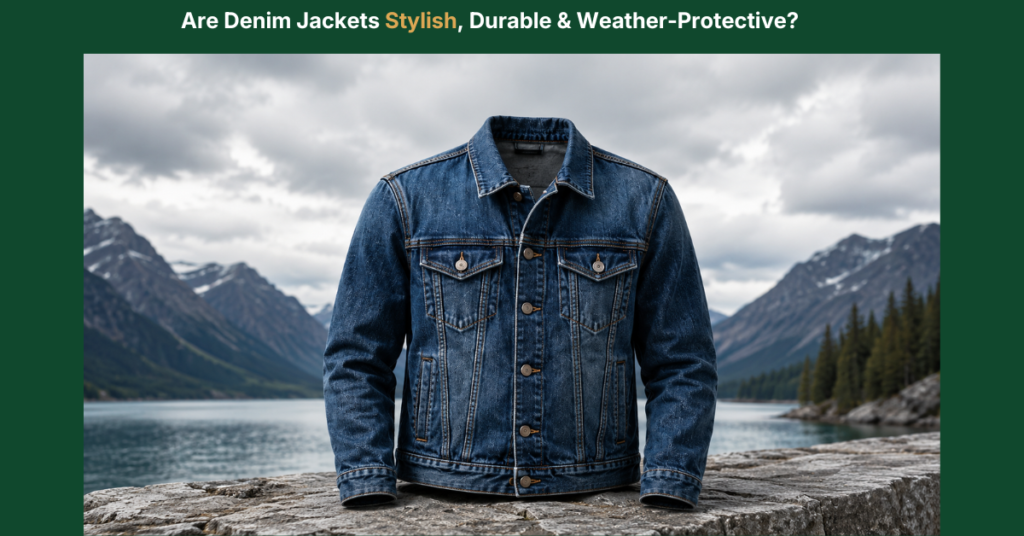
Are Denim Jackets Stylish, Durable & Weather-Protective?
Denim jackets are intrinsically stylish and highly durable against physical abrasion, but their baseline weather-protective capabilities rely entirely on the specific fabric weight in ounces and the integration of internal thermal linings. Purchasing denim outerwear based purely on its iconic aesthetic frequently results in severe thermal discomfort. Unlined cotton canvas acts as a thermal conductor rather than an insulator when wet. The rigid cotton twill readily absorbs atmospheric moisture upon contact. Cold water trapped against the body aggressively extracts metabolic heat. (Read more about how cotton loses insulation when wet.) Cotton fibers possess a high hydrophilic affinity, pulling moisture from the environment directly into the fabric’s core. This saturation displaces the microscopic air gaps between the warp and weft yarns. Air acts as a natural insulator, while water conducts thermal heat approximately twenty-five times faster than stagnant air. Consequently, wearing saturated, unlined cotton accelerates core body temperature reduction. Consumers routinely ignore these physical laws, prioritizing visual heritage over technical performance. This misalignment causes significant discomfort during transitional seasons and dangerous exposure during winter months. A structured trucker jacket provides zero defense against high-velocity wind chill unless reinforced by heavy under-layers and engineered surface treatments. This guide provides a rigorous diagnostic framework for assessing denim fabric weight, comparing lined variations for daily comfort, and avoiding high-stakes garment care mistakes. Mastering these material rules transforms a simple aesthetic purchase into a calculated wardrobe investment. You dictate the function of the garment instead of falling victim to its physical limitations.
Why analyzing denim jackets determines your seasonal wardrobe strategy
Analyzing denim jackets determines your seasonal wardrobe strategy by forcing you to align the garment’s baseline physical limitations with your actual environmental exposure. You must evaluate the fabric’s physical limitations before expecting it to act as a winter survival tool.
Diagram Explanation
This graphic illustrates the core concept of thermal strategy. The central jacket represents the physical garment, which must be consciously matched against external environmental variables (temperature, wind, precipitation) to ensure physiological comfort rather than just aesthetic appeal.
Traditional denim is a thick, highly durable cotton weave that blocks wind and resists abrasion, but rapidly absorbs water and loses thermal heat when wet. The structural composition of standard indigo-dyed twill relies on a tight diagonal weave pattern. This mechanical density creates a physical barrier that deflects sharp impacts, thorns, and heavy friction with ease. However, this same dense matrix acts like a sponge during precipitation. The absence of a synthetic durable water repellent coating leaves the raw cotton entirely vulnerable to rain. Water breaches the surface tension immediately, traveling down the cotton fibers and flooding the internal microclimate of the jacket. The thermal failure is instantaneous and absolute.
Developing a functional wardrobe requires acknowledging these precise material boundaries. You cannot force a summer-weight textile to perform winter duties without facing physiological consequences. True sartorial mastery involves deploying the correct fabric weight for the exact atmospheric conditions you face. A proper seasonal strategy categorizes outerwear strictly by its thermodynamic capabilities, not just its visual appeal. Understanding how specific thread counts and fabric tensions manipulate body heat separates a deliberate wardrobe architect from an average consumer.
How to assess denim outerwear for weight, warmth, and lifespan
Assessing denim outerwear for weight, warmth, and lifespan requires a systematic physical evaluation of fabric ounces, internal thermal baffling, and specific surface treatments. Garment longevity depends entirely on the initial material density. Textile mills measure this density using ounces per square yard. Higher numerical values indicate thicker, more resilient cotton yarns spun with greater tension. This density translates directly into the garment’s lifespan. Lighter weights tear under stress. Heavier weights require extensive mechanical break-in periods but offer exceptional longevity. Readers seeking a deeper technical breakdown of material specifications should consult our dedicated resource on Understanding Fabric Weights. Execute the following physical evaluations to determine a jacket’s operational limits.
Diagram Explanation
The magnifying glass over the weave pattern demonstrates the process of visually inspecting material density. Tightly packed threads represent heavier fabric weights (14oz+), correlating directly with increased structural durability and long-term abrasion resistance.
-
Fabric Weight (Durability): Verify the denim’s weight in ounces (oz). You must target 14oz+ for rugged workwear applications. This heavyweight category utilizes thick warp threads that resist significant mechanical abrasion, punctures, and structural tearing. Heavyweight fabrics mold rigidly to the body over time, acting as a physical armor against environmental friction. Conversely, select 10oz fabrics for lightweight fashion layering. These lighter weaves provide superior drape, immediate comfort, and full range of motion at the cost of durability.
-
Internal Lining (Warmth): Check for sherpa, flannel, or blanket linings required to trap metabolic heat during winter. Bare cotton twill transfers heat directly away from the body. An internal sherpa lining introduces a thick, synthetic pile. This pile creates thousands of microscopic dead-air spaces that capture and hold the infrared heat radiating from your torso. A blanket lining offers a dense, low-profile woolen or synthetic blend, reducing the visual bulk of the jacket while effectively disrupting cold air transfer. Flannel lining adds a soft, localized layer of warmth suitable only for mild transitional seasons.
-
Surface Treatment (Weather Resistance): Identify raw, unwashed denim versus heavily distressed denim. Raw denim retains the original starch from the manufacturing loom. This stiff, untreated surface offers slightly better initial wind resistance because the starch fills the microscopic gaps in the weave. Distressed denim undergoes intensive chemical washing, pumice stone agitation, and physical abrasion in the factory. This artificial aging heavily compromises the structural integrity of the cotton twill, reducing both its lifespan and its baseline weather-protective capabilities. (Learn more about water-resistant denim treatments.)
| Denim Weight (oz) | Base Durability | Weather Capabilities | Primary Textile Function |
|---|---|---|---|
| 10oz – 12oz | Low to Moderate | Zero insulation; blocks only light wind | Spring/Summer aesthetic layering and extreme mobility |
| 13oz – 15oz | High (Rugged) | Moderate wind block; fails immediately in rain | Standard daily wear, structural fading, and abrasion resistance |
| 16oz+ (Heavyweight) | Extreme | Severe wind block; slow initial water absorption | Specialized workwear, harsh environments, and rigid styling |
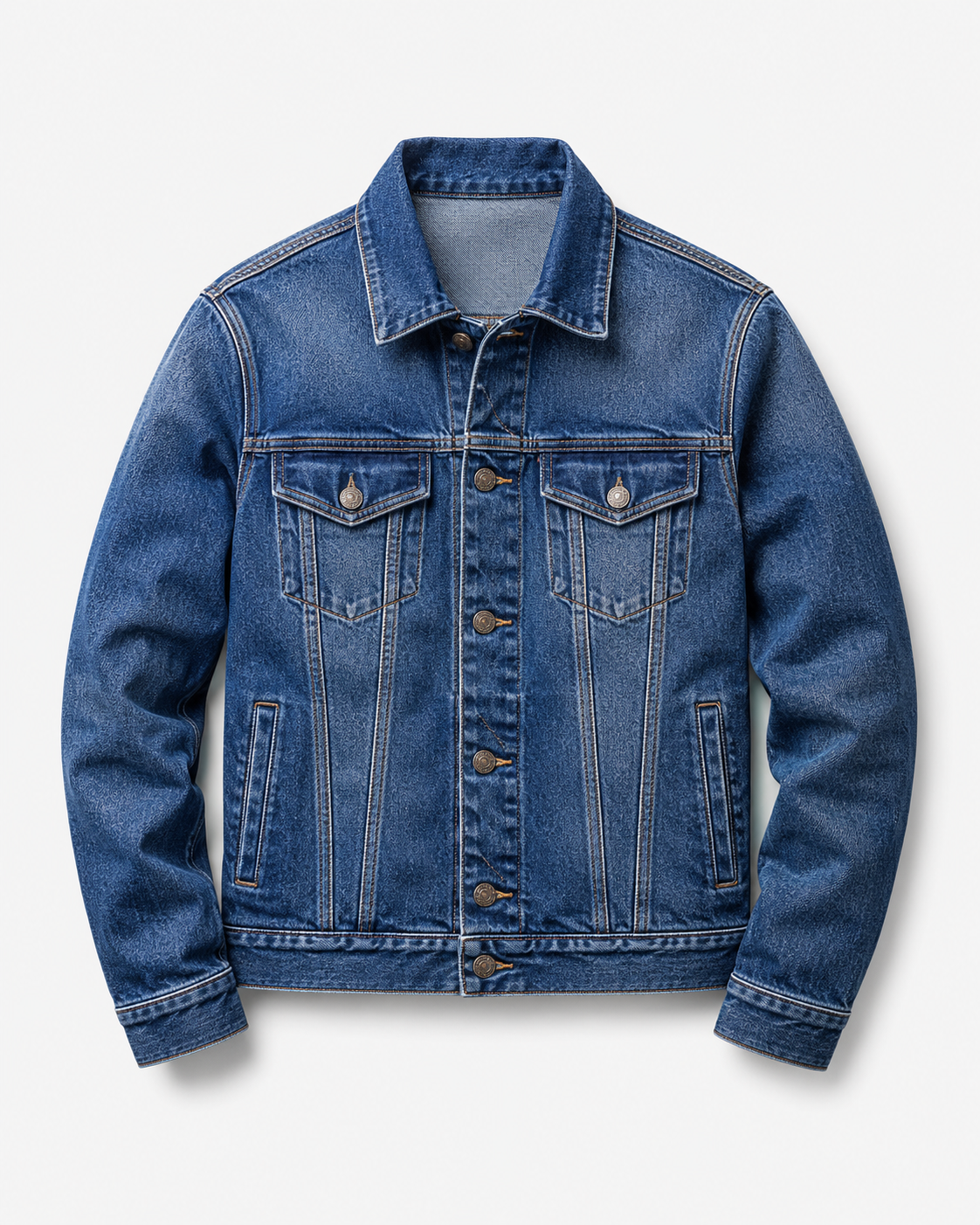
Compare denim jacket variations to optimize your daily comfort and protection
Comparing denim jacket variations optimizes your daily comfort and protection by contrasting the sleek, unlined styling of a standard trucker jacket against the protective thermal bulk of a sherpa-lined coat. Understanding the structural differences between these distinct models prevents severe daily discomfort. The architectural silhouette of the garment directly restricts its internal volume. A slim-fitting unlined jacket cannot physically accommodate heavy wool sweaters without restricting blood flow and mobility. Conversely, a lined coat features a relaxed block pattern designed specifically to house thick layers and internal baffling.
If: The user requires a highly durable, stylish layer for dry winter commutes that won’t leave them freezing…
Do: Select a heavy-weight denim trucker jacket featuring a fully lined sherpa interior and insulated sleeves.
Result: The garment effortlessly withstands physical abrasion and traps body heat, maximizing both style and thermal protection.
Standard trucker jackets feature an unlined, close-fitting cut. This architecture prevents effective heat retention because the cold cotton rests too close to the body. The design functions flawlessly in seventy-degree weather. Introducing a synthetic pile interior changes the thermodynamic equation completely. The heavy cotton twill shell acts as a windbreak, stopping cold gusts from penetrating. The internal sherpa pile acts as a furnace, capturing the body’s natural thermal radiation and recirculating it against the torso. The sleeves require a smooth, quilted insulation rather than pile, allowing the arms to slide in and out of the garment without painful friction against base layers.
Waxed denim introduces a separate, highly technical variable into this comparison. Manufacturers impregnate the raw cotton weave with melted paraffin or beeswax. This chemical saturation fills the microscopic gaps between the warp and weft threads entirely. The cured wax establishes a highly effective hydrophobic barrier. Raindrops bead up and roll completely off the surface rather than penetrating the fibers. Waxed variants require routine heat application and re-waxing maintenance to retain their weather-protective properties. Proper temperature regulation beneath any of these heavy shells requires strategic base layers. To optimize this internal microclimate, read our complete guide on How to Layer Under Denim for Winter.
| Jacket Category | Durability Score | Weather Resistance Rating | Thermodynamic Capacity |
|---|---|---|---|
| Unlined Trucker | 8/10 (High structural abrasion resistance) | 2/10 (Zero water repellency; conducts cold) | Low (Rapidly transfers heat away from the torso) |
| Sherpa-Lined | 8/10 (High structural abrasion resistance) | 4/10 (Retains core heat even when damp) | High (Actively traps and recirculates metabolic heat) |
| Waxed Denim | 9/10 (Wax reinforces cotton fibers tightly) | 8/10 (Highly hydrophobic against rain and snow) | Moderate (Blocks aggressive wind shear effectively) |
Avoid denim apparel mistakes that compromise fabric longevity and warmth
Consumers frequently compromise fabric longevity and warmth by committing denim apparel mistakes, specifically treating porous cotton twill like a synthetic, weather-resistant raincoat. Garment failure rarely stems from manufacturing defects. Failure almost exclusively results from improper deployment and severe maintenance errors. The physical properties of cotton demand strict adherence to usage guidelines. Ignorance of these rules guarantees premature fabric degradation and miserable thermal experiences.
Diagram Explanation
The washing machine graphic with a critical alert symbol highlights the mechanical and thermal dangers of standard laundering. High heat and rigorous tumbling action actively break down warp threads, melt protective factory starches, and cause irreversible fiber contraction.
The Rainstorm Mistake
Wearing an untreated denim coat in a torrential downpour, leading to the cotton soaking through and pulling core heat away from the body.
The Over-Washing Mistake
Throwing raw or high-quality denim into a hot washing machine and dryer every week, destroying the fabric’s structural integrity and custom fade.
Exposing raw denim to hot water triggers aggressive and irreversible fiber contraction. The cotton yarns shrink unpredictably across multiple axes. This physical reaction alters the garment’s tailored fit permanently. High-heat mechanical drying exacerbates this textile degradation. The rapid tumbling action physically breaks down the warp threads. The intense heat melts the factory starch holding the raw fibers rigid. The garment completely loses its structured silhouette and drapes lifelessly.
Furthermore, frequent chemical detergent application strips the indigo dye uniformly across the entire garment. The user loses the opportunity to develop high-contrast, personalized fades based on their unique anatomical movement patterns. The natural biomechanics of human movement create specific stress points—such as honeycombs at the elbow crooks—that establish a garment’s heritage aesthetic. Washing destroys this record. Strategic neglect represents the optimal maintenance strategy for heavyweight twill. Let the fabric air out naturally in a well-ventilated space. Utilize targeted spot-cleaning with a damp cloth for minor localized stains. To safely extend the life of your raw and washed weaves without shrinking the garment, review our complete guide on How to Properly Wash Denim Outerwear.
The ultimate denim jacket evaluation checklist to verify before checkout
Use this ultimate denim jacket evaluation checklist to perform a rapid, foolproof physical audit of a garment’s fabric weight, thermal capacity, and intended weather limits before finalizing checkout. Impulse purchases ignore physical reality. A systematic pre-purchase audit guarantees alignment between the jacket’s engineered capabilities and your precise operational requirements. Evaluate the textile data objectively. Never allow aesthetic preferences to override functional deficits. Treat this checklist as a mandatory diagnostic protocol. Each checklist item demands a complete, factual query. Proceed with the transaction only when the garment satisfies the exact environmental parameters of your local climate zone. Failing this audit indicates the garment will fail you in the real world.
Pre-Purchase Checklist
Commit to the right denim jacket construction for lifelong style and wear
In conclusion, committing to the right denim jacket construction guarantees lifelong style and wear by perfectly aligning your aesthetic desires with the fabric’s precise physical realities. Always match the specific weight and lining of the denim directly to your daily weather exposure. Expecting an unlined cotton jacket to act as a winter survival tool will result in a miserable, freezing experience, regardless of how stylish it looks. Select a rugged, adequately lined denim coat, care for the fabric properly, and secure an iconic piece of outerwear that looks better with every year of wear.