
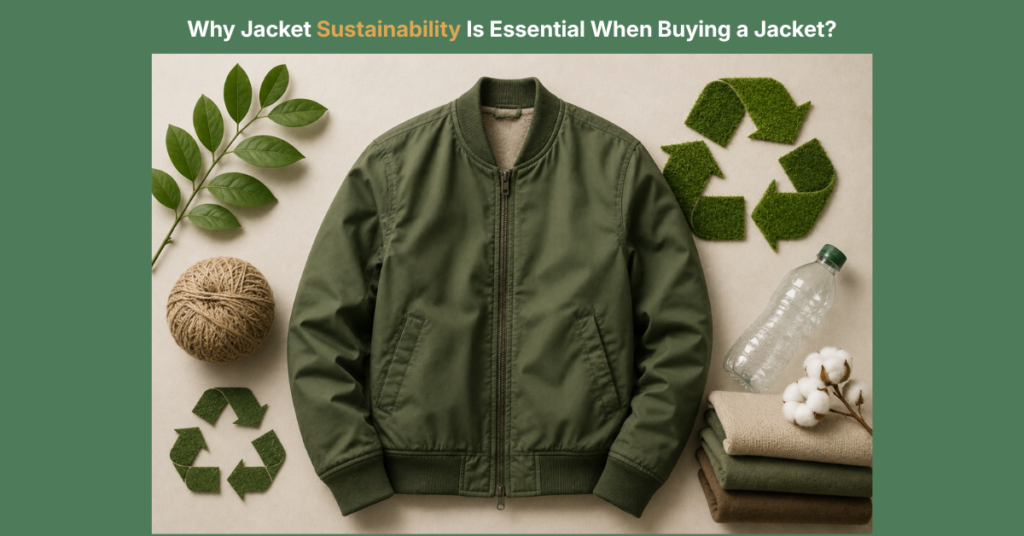
Why Jacket Sustainability Is Essential When Buying a Jacket?
A rigorous diagnostic framework for assessing eco-friendly outerwear, navigating material science, and protecting the environment.
Jacket sustainability is essential when buying a jacket because prioritizing ethically manufactured, closed-loop textiles directly dictates both the long-term ecological preservation of the environment and the true financial cost-per-wear of the garment. Purchasing cheap outerwear reliant on virgin plastics forces consumers into constant, expensive repurchasing cycles while actively degrading natural watersheds. This guide provides a rigorous diagnostic framework for assessing eco-friendly outerwear certifications, comparing closed-loop textiles against traditional synthetics, and avoiding high-stakes greenwashing mistakes.
The technical apparel industry operates on intensive supply chains that heavily impact global ecosystems. Manufacturers extract raw petroleum, process it into synthetic polymers, apply complex chemical surface treatments, and ship the resulting garments across continents. Analyzing the sustainability of these processes is not a philosophical exercise; it is a measurable assessment of material science and supply chain ethics. When you evaluate a jacket’s construction, you are calculating its environmental debt. Every component, from the face fabric down to the seam-taping adhesives, carries a specific carbon footprint. High-performance outdoor gear requires weather resistance, but achieving that resistance should never necessitate the permanent pollution of the ecosystems those garments are designed to explore.
You must adopt a clinical approach to your purchasing decisions. Discard vague marketing claims and demand verifiable proof of chemical safety. Focus entirely on structural integrity, ethical manufacturing evidence, and the physical lifespan of the textile. A sustainable jacket remains functional for decades, resisting abrasion and repelling moisture without leaching persistent toxins into the rain.
Why analyzing jacket sustainability protects both the environment and your wallet
Analyzing jacket sustainability protects both the environment and your wallet by replacing disposable, virgin plastic consumption with durable, closed-loop textiles that drastically reduce the long-term cost-per-wear.
Evaluating the physical longevity of your technical outerwear provides the most accurate metric of its true financial value. Consumers frequently miscalculate their return on investment by looking exclusively at the initial retail price. Fast-fashion production models intentionally sacrifice structural durability to suppress manufacturing costs, utilizing low-denier synthetic weaves and unstable polyurethane coatings that delaminate rapidly under standard field conditions.
Rule
Always prioritize the verifiable ethical construction and physical longevity of a garment over standard fast-fashion pricing models.
Reason
Cheaply manufactured outerwear relies entirely on low-grade virgin plastics that undergo rapid mechanical degradation and hydrolysis. These low-density synthetic textiles lack the tear resistance and chemical stability required for repair, effectively forcing the consumer into a permanent, seasonal repurchasing cycle.
Example
Consider the mathematics of purchasing a budget $60 raincoat every single season because the waterproofing flakes off after minimal friction against a backpack strap. Over ten years, this consumer spends $600 and sends ten non-biodegradable garments to a landfill. Contrast this with investing $350 once in a lifetime-warrantied, high-denier recycled-nylon shell. This single sustainable investment repels severe weather for a decade, generating a vastly superior financial return while entirely eliminating the recurring ecological waste.
How to assess eco-friendly outerwear certifications before evaluating brands
Assessing eco-friendly outerwear certifications requires a systematic verification of recycled content standards, chemical safety protocols, and ethical labor practices before evaluating specific brand marketing.
To filter out unsubstantiated marketing claims, you must verify independent, third-party audits embedded in the garment’s supply chain. Look past the aesthetic branding and immediately locate the physical tag or the digital technical specification sheet. You are looking for concrete proof that the manufacturer subjected their raw materials, chemical dye baths, and factory conditions to objective scientific scrutiny.
-
Recycled Content Verification:
Inspect the product tag for the Global Recycled Standard (GRS) certification. This protocol guarantees that the brand utilizes closed-loop sourcing, verifying the exact percentage of recycled content within the textile while strictly tracking the chain of custody from the recycling facility to the final retail product.
-
Chemical Safety Protocols:
Verify the presence of OEKO-TEX® or bluesign® approvals on the garment specifications. These distinct chemical frameworks strictly guarantee that the textile manufacturing and dyeing processes generate no toxic run-off, completely restricting heavy metals, formaldehyde, and other hazardous chemicals from the final fabric.
-
Ethical Labor Practices:
Assess the garment for recognized Fair Trade certifications. These standards ensure safe factory conditions, mandate living wages for all garment workers, and explicitly prohibit child labor or exploitative overtime practices within the cut-and-sew facilities.
Eco-Friendly Certification Decision Matrix
| Certification Label | Environmental Standard Verified | Diagnostic Application |
|---|---|---|
| Global Recycled Standard (GRS) | Validates pre-consumer and post-consumer recycled textile volumes. | Use this to confirm the jacket’s face fabric reduces reliance on virgin petroleum extraction. |
| bluesign® | Audits chemical input streams before manufacturing begins. | Use this to verify that the factory prevents toxic water pollution at the source level. |
| OEKO-TEX® Standard 100 | Tests the finished garment for a massive list of harmful chemical residues. | Use this to ensure the interior lining sitting against your skin is entirely free of hazardous toxins. |
| Fair Trade Certified™ | Audits factory conditions and ensures financial premiums go directly to workers. | Use this to confirm the human element of the supply chain aligns with ethical wage standards. |
Compare sustainable garment materials against traditional synthetic fabrics
Comparing sustainable garment materials against traditional synthetic fabrics allows you to prioritize closed-loop recycled textiles and non-toxic coatings without sacrificing essential technical field performance.
Transitioning to environmentally conscious outerwear requires a deep understanding of material substitution. You do not have to accept lower performance metrics to protect the environment. Modern textile engineering has advanced to a point where post-consumer recycled polymers exhibit the identical tensile strength and abrasion resistance as newly extruded virgin plastics. The primary differentiation occurs at the chemical treatment phase, specifically regarding how the fabric repels water. Historically, the industry saturated jackets in fluorocarbons to achieve water resistance. Recognizing the severe biological impact of these compounds is mandatory for modern gear selection. For a deeper analysis of modern waterproofing mechanics, review our technical guide on Understanding PFC-Free DWR Coatings.
The user requires a heavy-duty waterproof shell for aggressive backcountry hiking and extended alpine exposure.
Select a jacket utilizing a PFC-free Durable Water Repellent (DWR) coating applied directly over a high-denier recycled face fabric.
The user achieves expedition-level weather defense without shedding toxic “forever chemicals” into the local watershed during heavy precipitation.
Material Comparison Table
| Material Category | Environmental Impact | Technical Field Performance |
|---|---|---|
| Virgin Polyester / Nylon | High carbon footprint; relies on raw petroleum extraction and highly intensive energy consumption. | Excellent durability and weather resistance; historically the industry standard for hard-wearing alpine gear. |
| Closed-Loop Recycled Synthetics | Drastically lowers emissions; redirects existing plastics from landfills and oceans back into the supply chain. | Identical tensile strength and hydrostatic head rating capabilities as virgin plastics; highly durable. |
| Traditional C8/C6 DWR Coatings | Disastrous; releases bioaccumulative “forever chemicals” (PFAS) that permanently contaminate local water supplies. | Exceptional water beading capabilities; highly resistant to contamination from body oils and camp smoke. |
| PFC-free DWR Coatings | Excellent; utilizes safe silicone or polyurethane-based formulations that break down harmlessly in the environment. | Highly effective water repellency; requires slightly more frequent washing and heat activation to maintain peak performance. |
Avoid sustainable jacket purchasing mistakes that compromise field utility
Consumers frequently compromise field utility by committing sustainable jacket purchasing mistakes, specifically sacrificing necessary physical durability for unverified “earth-friendly” marketing labels.
Purchasing eco-conscious gear demands strict analytical discipline. The apparel industry is saturated with deceptive terminology designed to manipulate well-intentioned buyers. Manufacturers often highlight a single natural component while obscuring a fundamentally weak structural design. You must evaluate the entire garment as a functional system. A jacket fails its primary purpose if it cannot physically withstand the environmental conditions of your intended activity, regardless of its organic origins.
The Durability Mistake
Buying an untreated organic cotton shell for heavy alpine rain simply because the fiber is natural and biodegradable.
The Technical Fix
Opt for a recycled nylon hardshell. Cotton absorbs water, drastically lowering your core body temperature and creating an immediate hypothermia risk in the backcountry. Furthermore, replacing a failed natural garment repeatedly creates more landfill waste and manufacturing emissions than buying one highly durable synthetic piece that lasts a decade.
The Greenwashing Mistake
Trusting vague marketing terms like “Earth-Friendly,” “Conscious,” or “Green” without finding any third-party backing on the physical product tag.
The Technical Fix
Demand strict, verifiable supply chain transparency before handing over your credit card. If the brand cannot provide clinical documentation like a bluesign® or GRS certification, their sustainability claims hold zero physical weight.
To understand how to extend the life of these durable synthetics, review our technical guide on How to Repair Your Technical Outerwear.
The ultimate jacket sustainability checklist to verify before checkout
Use this ultimate jacket sustainability checklist to perform a rapid, foolproof quality audit of a brand’s ethical supply chain and chemical manufacturing certifications before finalizing checkout.
Before completing any transaction, you must force the garment through a rigid diagnostic filter. This process isolates the verifiable data from the marketing aesthetics. Scan the physical hangtag or heavily scrutinize the digital product specification sheet for exact terminology. If the garment fails to provide explicit answers to these structural queries, it fails the sustainability test.
Pre-Checkout Audit
Commit to verifiable jacket sustainability to reduce your carbon footprint
In conclusion, committing to verifiable jacket sustainability reduces your carbon footprint by structurally ensuring your technical outerwear actively honors and preserves the natural environments you explore.
You hold the immediate financial power to dictate manufacturing standards within the outdoor apparel industry. Refusing to subsidize toxic chemical processes and disposable construction methods forces brands to adopt transparent, scientifically backed ecological standards.
Rule:
Always ensure the manufacturing practices of your gear directly align with the permanent ecological preservation of the outdoors.
Reason:
Buying disposable outerwear engineered with virgin plastics and forever chemicals actively degrades the very same environments you are trying to explore.
Example:
Audit the brand’s third-party certifications, choose closed-loop recycled and heavily repairable materials, and secure high-performance technical gear that respects and honors the natural world.