
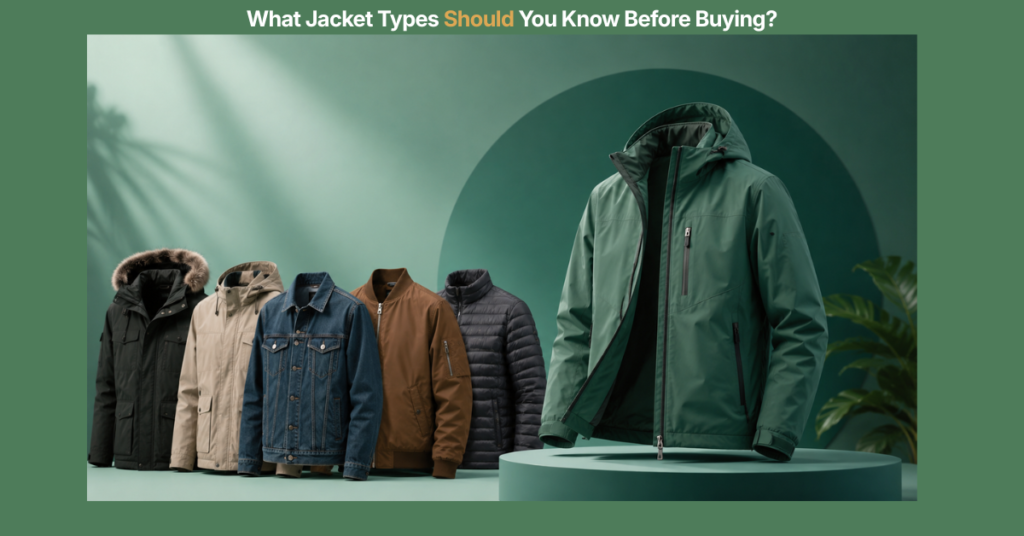
What Jacket Types Should You Know Before Buying?
Understanding the distinct jacket types and outerwear categories is the foundational step in building a functional wardrobe, ensuring that every garment purchased is structurally engineered to meet specific climate demands and daily dress codes.
The apparel industry categorizes outerwear by specific functional silhouettes. Ignoring these categories in favor of brand names leads to critical failures in comfort and utility. A logo cannot keep you warm when the garment’s underlying architecture is designed for a completely different environment. This guide defines the architectural differences between extreme winter coats, transitional styles, and technical alpine shells.
Why understanding jacket types prevents expensive outerwear mistakes
Understanding distinct jacket types prevents expensive outerwear mistakes by forcing consumers to match the garment’s structural engineering to their actual environmental reality before evaluating brand aesthetics.
Rule: Always lock in the specific outerwear category before looking at the brand.
Reason: High-end materials cannot compensate for the wrong structural category. A premium, heavyweight denim jacket will still fail rapidly in a rainstorm where a budget hardshell succeeds.
Example: Wearing a designer bomber jacket to an alpine ski resort results in immediate physical discomfort and thermal heat loss. The garment fails not because of its quality, but because the retailer improperly labeled a transitional piece as “winter wear.”
Identify the core jacket categories designed for extreme winter climates
The core jacket categories designed for extreme winter climates rely on heavy insulation, trapped dead air space, and elongated silhouettes to prevent core temperature loss in sub-zero environments.
The Parka
A parka is structurally defined by its extended length and integrated weather defense systems. Derived from the military N-3B Snorkel Parka, true parkas must feature a long-line silhouette reaching the mid-thigh or knee to protect the femoral arteries. They also incorporate a fur or faux-fur ruff around the hood to actively disrupt freezing crosswinds before they reach the face.
The Puffer (Down/Synthetic Jacket)
A puffer jacket operates strictly on the principles of thermodynamics. It utilizes baffle-box construction designed purely to trap dead air within insulated compartments. This specific structural engineering generates a maximum warmth-to-weight ratio, allowing the wearer to retain intense metabolic heat without wearing heavy, restrictive fabrics.
The Insulated Shell
An insulated shell acts as a unified two-layer system combining a waterproof exterior face fabric with integrated internal insulation. It serves as the standard uniform for alpine environments, providing external abrasion and moisture defense alongside internal temperature regulation.
For a deeper breakdown of thermal metrics within these categories, explore the resources in our Jacket Foundations Hub.
Compare transitional jacket styles for unpredictable shoulder seasons
Transitional jacket styles are engineered for unpredictable shoulder seasons, offering moderate wind and rain resistance without the heavy thermal insulation that causes overheating in mild temperatures.
If the forecast calls for high wind but no rain, Do choose a bomber jacket. Result: You block the chill effectively without overheating your core.
The Bomber Jacket
The bomber relies on a compact, sealed structure to trap a baseline layer of body heat. Its military aviation origins—specifically the MA-1 Flight Jacket—dictate ribbed cuffs, a cropped waist, and a tight hem to create an absolute wind-seal against moderate drafts.
The Trench Coat / Mac
Trench coats provide elongated structural coverage against precipitation without added thermal bulk. These elongated silhouettes utilize tightly woven gabardine weave fabric or rubberized cotton. They are built specifically for urban rain protection over formal wear, preventing tailoring from getting wet during commutes.
The Denim & Leather Moto
Denim jackets and leather motos serve as physical barriers against the environment. They rely on heavy, durable face fabrics to provide immense abrasion resistance without thermal insulation, making them highly effective for dry, brisk conditions.
| Jacket Style | Primary Material | Best Weather Condition | Formality Level |
|---|---|---|---|
| Bomber (MA-1) | Nylon / Polyamide | High Wind, Dry, Cool | Casual to Smart-Casual |
| Trench Coat | Gabardine Weave / Cotton | Heavy Rain, Moderate Temp | Business to Formal |
| Moto / Denim | Leather / Heavyweight Denim | Dry, Brisk, Abrasive Environments | Rugged Casual |
Recognize technical jacket silhouettes built for alpine and athletic performance
Technical jacket silhouettes are built specifically for alpine and athletic performance, utilizing advanced textile science to manage metabolic heat output and severe weather simultaneously.
The Hardshell
A hardshell functions as non-insulated exterior armor. It utilizes micro-porous membranes (like an ePTFE membrane) to achieve 100% waterproof and windproof protection. By maintaining a high hydrostatic head rating, this category acts as an impenetrable barrier against severe, sustained storms.
The Softshell
A softshell is a high-output layer engineered for dynamic movement. It prioritizes mechanical stretch and a high Moisture Vapor Transmission Rate (MVTR). This ensures highly breathable, water-resistant performance during rigorous physical activity, preventing internal sweat accumulation.
The Windbreaker
A windbreaker serves as an ultra-lightweight, highly packable nylon layer. It is designed solely to cut convective heat loss (wind chill) from the wearer’s microclimate without adding any thermal bulk.
Avoid choosing the wrong jacket style by misjudging your local climate
Consumers frequently avoid choosing the right jacket style by misjudging their local climate, prioritizing aesthetic trends over the actual meteorological demands of their geography.
Mistake: Buying a heavily insulated parka for a mild, rainy Pacific Northwest winter.
Fix: Layer a waterproof hardshell over a lightweight fleece instead to manage moisture without sweating.
Mistake: Buying a highly breathable, water-resistant softshell for a monsoon climate.
Fix: Upgrade to a fully seam-taped trench coat or hardshell category to block sustained, heavy rain.
The ultimate checklist for identifying the right jacket type before checkout
Use this categorization checklist to systematically filter your options on an e-commerce store, ensuring your chosen jacket type aligns precisely with your climate and wardrobe requirements before finalizing a purchase.
- [ ] Does this category match my primary climate?
- [ ] Is this style appropriate for my daily dress code?
- [ ] Have I confused a transitional style for a true winter coat?
Commit to the ideal jacket category to complete your perfect outfit builder setup
Committing to the ideal jacket category allows you to establish the structural foundation of your wardrobe, ensuring your outerwear seamlessly dictates the rest of your layering strategy.
Rule: Let the climate and the occasion dictate the category before you ever look at a price tag.
Reason: The most expensive jacket on the market is entirely useless if the structural silhouette doesn’t match the environmental reality it is worn in.
Example: Lock in your jacket type, plug it into your Outfit Builder to map your mid-layers, and purchase with total confidence.
Conclusion
Mastering outerwear taxonomy shifts the purchasing process from aesthetic guesswork to technical selection. Recognizing the definitive architectural boundaries between sub-zero parkas, transitional layers, and alpine shells eliminates climate mismatch. Base your wardrobe investments entirely on environmental demands and material physics, ensuring every garment provides exact utility for its intended weather condition.